En Español

« Back to Blog

Southwest Plastic Surgery’s Hand Prevention Protocol
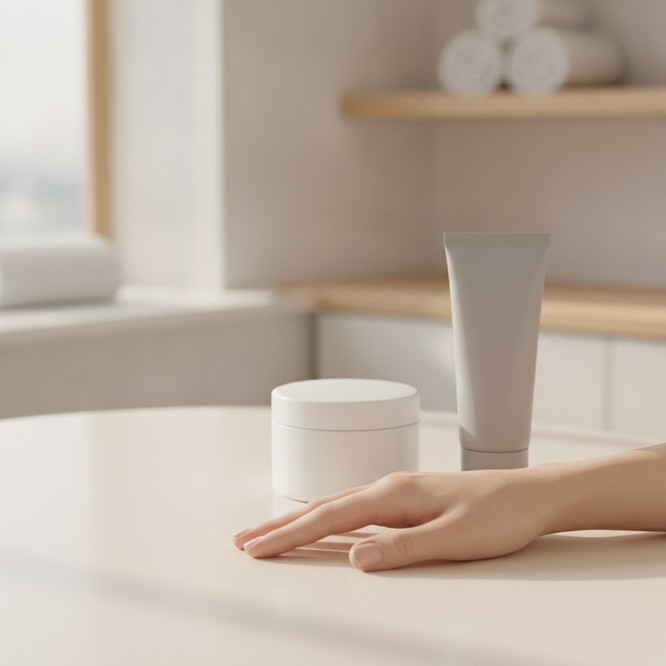
Clean treatment-room close-up of a hand with skincare product, illustrating Southwest Plastic Surgery's hand-aging prevention protocol.

GB News recently asked Dr. Frank Agullo for the single most important habit to slow hand aging. His answer was sunscreen, applied every morning and reapplied after washing. It’s the right answer, and it’s also just the first of four steps our MedSpa team builds a full protocol around.

Here’s the full routine, why hands age faster than most patients expect, and where our team’s in-office tools pick up where a home routine leaves off.

Why Hands Age Ahead of the Face

The skin on the back of the hand is thinner than facial skin, the fat pad underneath is smaller, and hands accumulate more raw sun exposure over a lifetime than faces do. Most patients have worn a facial sunscreen for years. Very few extend that habit past the wrist.

We then notice brown spots and thin, crepey texture on the skin of their hands appearing much earlier than on the rest of their body and much sooner than on their face. It occurs from all sun exposure over a lifetime on less “padded” areas.

Step One: Daily Sun Protection

Use of broad-spectrum sunscreen on the backs of the hands (minimum SPF 30, reapplied after washing the hands because of soap) has the highest impact of any habit I have observed for longevity. Apply it each morning.

Most brown spots that patients complain about and the crepey texture that we address result directly from sun exposure. This prevents most everything we deal with, all on its own.

The Full Protocol

Step What we recommend Why it matters
1. Protect Broad-spectrum SPF 30+, reapplied after every hand wash Prevents most new sun-driven damage
2. Repair A thick cream with ceramides, glycerin, and hyaluronic acid after every wash Rebuilds the moisture barrier that soap and sun damage
3. Rebuild A retinoid, two to three nights a week Builds collagen, smooths texture, softens crepey appearance over time
4. Fade Vitamin C and niacinamide topicals Gradually fades existing spots and helps prevent new ones

Our team counsels patients to expect eight to twelve weeks of consistent retinoid and vitamin C use, two to three times a week, before seeing a meaningful change. Skin does not respond overnight, and setting that expectation upfront keeps patients on a routine long enough for it to actually work.

When the MedSpa Team Steps In

A solid home routine handles prevention reasonably and helps greatly with early color and textural alterations; however, there will be limitations.

If the pigment has gotten deeper, crepey and your topical regimen has not done the trick, then our Med Spa and Laser team can help. Things like IPL, chemical peels, microneedling and laser resurfacing are much more efficient than any topical at correcting issues that go below the uppermost skin. If you are showing more tendons, veins or bone due to volume loss, you do not have a quality issue. Your solution would be with something like filler. A filler along with the proper use of a biostimulator is what our hand rejuvenation program recommends for people who have volume loss problems.

The Practice’s Approach

Southwest Plastic Surgery’s philosophy on hand aging mirrors its philosophy on facial aging: identify the actual driver, sun damage, barrier breakdown, collagen loss, or lost volume, before recommending a product or a procedure. Dr. Agullo, who completed his plastic surgery fellowship at Mayo Clinic and serves as Clinical Associate Professor of Plastic Surgery at Texas Tech University Health Sciences Center, built the practice’s MedSpa protocols around that same structural logic.

Why Patients Choose Southwest Plastic Surgery

Roughly sixty percent of the practice’s current patients travel from outside El Paso for care built on published pricing and a straightforward recommendation, whether that recommendation is a fifteen-dollar tube of sunscreen or an in-office laser session.

Ready to Start?

Our team will assess your hands the same way we’d assess a face: what’s driving the appearance, and what actually fixes it.

Call (915) 590-7900, text 1-866-814-0038, or book online at agulloplasticsurgery.com/appointments. #StayBeautiful.

@RealDrWorldWide on Instagram, TikTok, and Snapchat, @Agullo on X, or @AgulloPlasticSurgery on Facebook.


Skin Longevity at the MedSpa: The Routine Our Patients Ask For by Name

Alastin and SkinCeuticals style serum bottles beside a mineral sunscreen on a bright MedSpa counter, illustrating skin longevity care at Southwest Plastic Surgery in El Paso.

The terminology at the front desk has morphed in recent years. A few years ago, a new patient would typically ask, “What makes me younger by Friday?” Today, she is saying, “I want to talk about longevity,” or “I am interested in my health span,” or “How can I preserve collagen,” rather than, “How can you fix my fine lines?” One recent patient stated, “Dr. Agullo, please future-proof my skin.” There is really no better three-word way to describe the longevity movement.

Dr. Frank Agullo could not be more thrilled about the shift. “Anti-aging was a lost bet from the beginning. Anti-aging, by definition, promised to roll back time and as you can imagine, time does not always wish to be rolled back. Longevity asks a better question: how do we help skin maintain health and function for the long haul? This is a bet that can and will be won.”

From Correction to Preservation

This transition stems from a fundamental change in medicine, as doctors increasingly prioritize not just how long patients live, but how healthily they live those years (i.e., their health span). This same thinking is now being applied to skin care, as patients now reallocate their money and focus away from undoing the damage of the past and toward protecting skin against the damage of the future.

“Aging starts at the cellular level. It is mitochondrial function, the level of inflammation in the skin, metabolic health, cellular repair mechanisms,” Agullo said. “What you see on the surface is just a report card on all of those things. This is why skin care truly begins much earlier in life than a wrinkle cream. It needs to work on a cellular level and needs to be treated in a more profound way than topical anti-wrinkle ingredients.”

With collagen levels starting to drop in the mid-20s and women losing an estimated 25 to 30 percent of their collagen in the first five years post-menopause, preservation will always beat rescue hands down.

The Foundation Comes Free

“Before I recommend one single ingredient or topical product,” Agullo said, “we start with the fundamentals. We want our patients to wear a daily sunscreen (the El Paso sun, in particular, means this is the one step that cannot be skipped), consume enough protein, include strength training in their weekly schedule, get real, sustained sleep and work to maintain a steady, relatively flat blood sugar line, thus limiting the glycation of collagen. Patients sometimes try to bypass the basics to leapfrog ahead to the new gadgets. This is something I tell every patient that I meet with in the MedSpa: An infusion or a device simply cannot fix five hours of sleep. Nothing can make up for not applying a sunscreen on a daily basis. The fundamentals are the treatment itself. Everything else is an amplifier that helps maximize your results when it is added to this consistent, daily and disciplined foundation.”

The Shelf: Why We Carry Alastin and SkinCeuticals

When you walk into the MedSpa at Southwest Plastic Surgery, you will notice two distinct skincare lines lining our shelf: Alastin and SkinCeuticals. That was a choice and an important one. Both Alastin and SkinCeuticals are known for their high quality and their evidence-based approach to skincare development. Every one of their formulations undergoes extensive testing and both brands publicly share their published scientific data, focusing on ingredients that are proven to support skin function, repair and protection. Here is the skin longevity routine our team builds around those two brands, from morning to night.

Step Product The Longevity Job
Morning defense SkinCeuticals C E Ferulic Antioxidant shield against UV and pollution damage
Morning protection Alastin HydraTint Pro Mineral SPF 36 Tinted mineral sunscreen patients wear every day
Night signal SkinCeuticals Retinol 0.5 The most studied collagen-stimulating topical class
Night repair Alastin Restorative Skin Complex TriHex peptides support new collagen and elastin while clearing damaged fragments
Targeted add-on SkinCeuticals A.G.E. Interrupter Advanced Formulated for glycation-stiffened, mature skin
Procedure support Alastin Regenerating Skin Nectar Preps skin before treatments, supports recovery after

“Longevity rewards consistency,” Agullo notes. “A shelf stacked with 30 different products from numerous brands suggests a hobby, not a treatment plan. The six products used consistently each day are a strategy designed for long-term benefits.”

Treatments That Build Collagen, Not Just Polish Skin

“You absolutely must first defend the collagen you have before building more,” says Agullo. The treatments at our MedSpa actively encourage new collagen formation. Procedures like microneedling and radiofrequency microneedling involve controlled micro-injuries that encourage the skin’s natural repair response and stimulate the production of fresh collagen over the next several months. Different types of laser treatments are used to address accumulated sun damage, improving skin tone, texture and radiance. Injectable biostimulators such as Sculptra work internally by prompting the body to produce more collagen. In this longevity approach, these treatments are used earlier, applied lightly and scheduled regularly for maintenance, rather than waiting until damage occurs and attempting more aggressive, restorative treatments. This is analogous to servicing your car regularly to keep it running well versus rebuilding the engine after it has seized up due to neglect. And when a patient’s concerns are related to structure or the actual pulling down and loss of volume of tissue rather than the quality of the skin, the MedSpa team is honest about referring those conversations to the surgical side of Southwest Plastic Surgery. Dr. Agullo completed his plastic surgery fellowship training at the Mayo Clinic, is board-certified by the American Board of Plastic Surgery and the American Board of Surgery and has been named a Castle Connolly Top Doctor for 13 consecutive years. When patients consult the MedSpa, they will be directed to the right tool for their needs, not the nearest one in the tool kit.

Start Before You Think You Need To

The unspoken message of the skin longevity revolution is that timing is critical. The best candidates for skin preservation today are the ones who may not yet think they need any interventions. If your current skin plan involves simply waiting to see what happens, consider reaching out. We would be happy to assess your skin’s actual condition, develop a tailored routine to protect it and outline a schedule for any treatments that fit into your overall strategy. #StayBeautiful

Dr. Frank Agullo shares his editorial opinion on the anti-aging movement at drworldwide.com, while his comprehensive patient protocol is available at agulloplasticsurgery.com.

Ready to Talk?

Visit agulloplasticsurgery.com to book your consultation, text 1-866-814-0038 or call (915) 590-7900. @RealDrWorldWide on Instagram, TikTok, and Snapchat, @Agullo on X, or @AgulloPlasticSurgery on Facebook.

The Collagen Aisle, Ranked: What Our Patients Ask Us Every Week

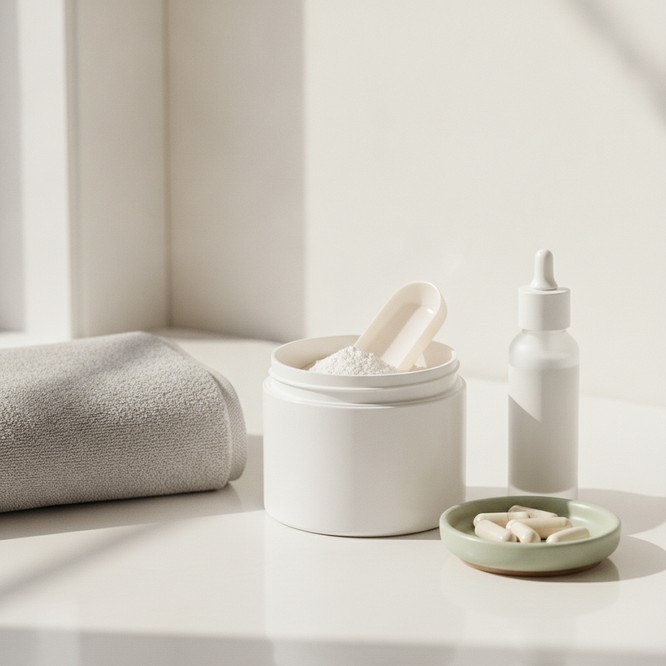
Collagen powder, capsules, gummies, and a serum bottle arranged on a bright counter, illustrating collagen supplement guidance from Southwest Plastic Surgery in El Paso.

The clinic sees more collagen ingestibles arrive than the average pharmacy. First off, a giant tub of unflavored collagen powder a patient has been using since January, who insists he takes it after hearing a lady down the street rave about it. Then, an electric-green gummy pouch discovered inside the purse of another patient at the point of signing out.

So. Will it achieve anything useful, you think?

Flow Space interviewed Dr. Frank Agullo on precisely that subject, powders versus serums versus capsules versus gummies. Here is the full answer he gave.

Why Patients Start Looking in the First Place

Actually, the ads are not pushing the supplement. It is people standing in front of their mirror and watching it go bad there.

Below the epidermis entirely, collagen forms the framework for your skin and maintains the structure of the dermis. The production of collagen in both men and women generally begins to drop off in the early twenties, at rates not easily noticeable. Women experience a far more pronounced collagen decline during menopause.

“In the first five years after menopause, women lose roughly 25 to 30 percent of the collagen in their skin,” Dr. Agullo says. “That is not a lifetime figure. That is five years. It explains why so many patients tell me their skin seemed to change all at once.”

Lower your expectations. Your focus should be on retaining what you currently have. Rebuilding 25 percent of your dermal scaffolding from a scoop of powder is not a reasonable outcome.

Powder Is the Only Format With Real Human Data

That shelf? Four formats, and only one has clinical trials.

Studies usually range from around 2.5 to 10 grams of daily hydrolyzed collagen peptide consumption, which results in modest changes in the skin (improved hydration, improved elasticity) over 8 to 12 weeks. That means slightly better over the course of three months.

“Powder wins for a simple reason,” Dr. Agullo says. “A scoop delivers the dose the research actually studied. That turns out to be the hardest thing in the entire category.”

Capsules, Gummies, and the Sugar Problem

Capsule products still contain the peptides found in powder, but only a small fraction of the studied dosage. It takes so many capsules to actually ingest a dose that mirrors study requirements that it becomes infeasible for most people. Almost everyone who does take capsules ends up just popping two of them a day and feeling that they did enough, having ingested a small fraction of what the people in the study took. If capsules are your go-to, we instruct patients to read the label and consume the accurate dosage.

We specifically tell people to avoid the gummies. The reason should be stated out loud rather than just dissuading anyone with no rationale.

“The collagen content per gummy is low, and most of them carry added sugar,” Dr. Agullo says. “Sugar drives glycation, where sugar molecules bind to proteins and stiffen them. Collagen is one of those proteins. Glycated collagen is more brittle and less elastic. So the product delivers a little collagen while adding something that degrades the collagen you already have.”

Format Reaches the studied dose Limitation Our guidance
Powder Yes Mixing, taste The format we recommend
Capsule Rarely Underdosing is common Fine if the dose is real
Gummy No Low content, added sugar Skip it
Serum Not applicable Cannot reach the dermis Treat it as a moisturizer

What a Collagen Serum Is Really Doing

A collagen serum seems as valid as any cosmetic and remains one of the most misunderstood items in modern beauty culture.

That molecule is enormous, and keeping molecules that size out is exactly what our outer skin layer does. Collagen only sits on top and holds moisture to the skin.

It does work, but it is slight and does not last. Your skin holds water so it looks temporarily fuller, and as soon as it is no longer in use, the temporary fullness goes away.

A topical focused on promoting collagen production would use retinoids, an effective vitamin C serum, or particular peptides as its main ingredient. These are the signals that encourage cells to produce more collagen. Simply printing the word “collagen” on the bottle’s front does not signify anything.

The Free Habit That Outperforms the Whole Aisle

As a minimum baseline measure, prior to any discussion of supplements, we question the patient about their usage of sunscreen.

El Paso has clear skies most of the year. UV exposure does more damage that we can control than anything else, and that includes diet, smoking, and pollution as the other controllable factors. UV rays trigger enzymes to destroy collagen while at the same time inhibiting any new collagen production. That is the reason sun exposure ages your skin most here.

Wear broad-spectrum sunscreen daily, and that will do far more for collagen preservation than any supplement. That is most of it. Use a retinoid nightly. Vitamin C daily. Eat enough protein. Get real sleep. Eat way less sugar (glycation again).

The Treatments That Do What Supplements Cannot

The minute someone wants direct collagen building rather than support for what is already there, either our MedSpa division or the surgical division will handle it.

Sculptra works by stimulating your body to make more collagen over a few months. Microneedling creates controlled injuries in the skin with a needle pen, and radiofrequency microneedling is more efficient than the traditional kind. Lasers work on the surface and just below it to improve texture, firmness, and quality of skin, and they give your daily skincare regimen something better to build on.

If the worry is tissue drooping, not the skin itself, then forget about collagen treatments. They will not fix it, not even close. It is purely structural loss and requires a conversation about that issue.

Dr. Agullo completed his plastic surgery fellowship at the Mayo Clinic, holding board certification from both the American Board of Plastic Surgery and the American Board of Surgery. For 13 consecutive years he has been ranked among the Top Doctors by Castle Connolly. He says part of his job involves being forthright about what a supplement will and will not do for a patient.

The Short Version

Take the powder daily. Give it three months to see whether you like it or not.

Gummies are silly. Use the serum as you would a moisturizer, which is what it basically is. And what is actually going to help the collagen in your skin, and keep the lines away, is sunscreen every single day.

“Collagen is a nudge, not a lift,” Dr. Agullo says. “It is not a facelift in a scoop. But it is worth something, and in this category that is a real distinction.”

#StayBeautiful.

Dr. Agullo’s comments appeared in Flow Space, “Powders, Serums, Gummies. What’s the Best Way to Get Your Collagen?” by Maggie Ryan, July 16, 2026. The surgeon’s own commentary version is on drworldwide.com, and the patient-education version is on agulloplasticsurgery.com.

Ready to Talk?

Want help building a skin plan? Or just a straight answer on whether a supplement will meet your goals? Let us walk you through it.

Call (915) 590-7900, text 1-866-814-0038, or book online at agulloplasticsurgery.com.

@RealDrWorldWide on Instagram, TikTok, and Snapchat, @Agullo on X, or @AgulloPlasticSurgery on Facebook.

Location Marker
Southwest Plastic Surgery
1387 George Dieter
Dr. Bldg C301
El Paso, TX 79936
Tel: (915) 590 7900
Fax: (915) 590 7902
Get Directions
The MedSpa Southwest Plastic Surgery West
5925 Silver Springs Dr.
Suite C
El Paso, TX 79912
Tel: (915)590-7907
Get Directions