En Español

« Back to Blog

The Scar Management Program at Southwest Plastic Surgery: From the Polished Blade at the Incision to the Laser at One Year
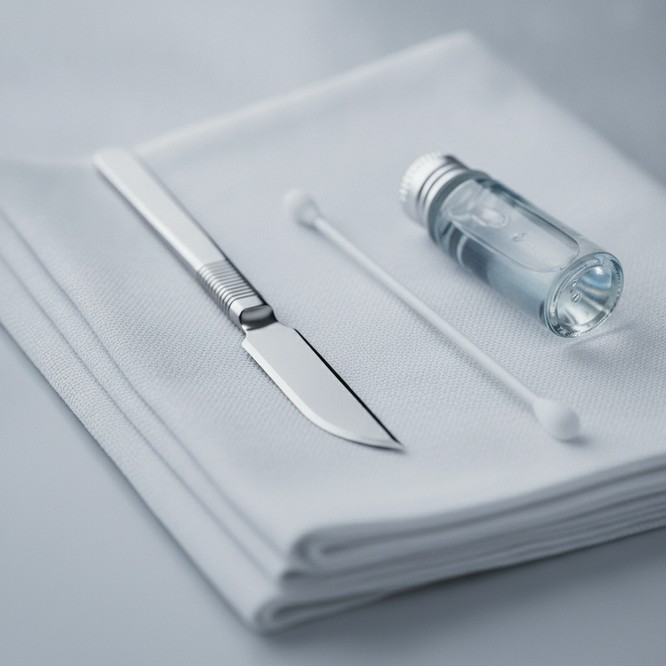
The Scar Management Program at Southwest Plastic Surgery: From the Polished Blade at the Incision to the Laser at One Year. Dr. Frank Agullo, MD, FACS, double board-certified plastic surgeon at Southwest Plastic Surgery in El Paso, Texas.

When patients sit down at the long table in the front office at Southwest Plastic Surgery to discuss a planned operation, the question of the scar comes up almost every time. “What will it look like?” The answer is honest, layered, and based on a real program that runs from the first decision in the operating room to the last MedSpa treatment a year later.

Dr. Frank Agullo served as a principal investigator alongside Michael Sanchez, PhD on a 114-patient clinical study of the Planatome surgical blade, featured in MPO Magazine under the headline “Significant Reduction in Hypertrophic Scarring Seen With Planatome’s Surgical Blades.” The findings are part of the broader scar management program at Southwest Plastic Surgery, and the longer version of how that program runs in practice belongs here.

Why Scar Quality Is a Series of Decisions

Scar quality is decided at six moments and shaped by one variable nobody controls.

The variable nobody controls is the patient. Genetics, skin type, ancestry, and personal scar history all enter the room with her. Honest pre-operative counseling sets the realistic expectation.

The six decisions are the surgeon’s. The incision location. The orientation of the incision. The length of the incision. The blade. The closure plan, layered, with the right suture choice. And the post-operative scar care plan, including silicone, compression, sun protection, and any post-op laser or microneedling at the right interval.

A scar program that controls all six decisions and supports the patient on the seventh variable produces a measurably better final scar than a program that controls only one or two.

The Six Decisions, in Order

Incision Location

Where the scar is going to live is the first decision. Inframammary fold for breast augmentation. Suprapubic crease for tummy tuck. Periareolar for selected breast operations. Submental for selected facial procedures. The location is chosen for surgical access, for the geometry of the planned operation, and for the position where the scar will be least conspicuous in the patient’s natural clothing and posture.

Incision Orientation and Length

A scar that runs along a natural skin tension line heals quieter than a scar that runs across one. A scar of the right length, neither over-engineered for the operation nor compromised by an attempt to be artificially short, heals better than a scar of the wrong length.

Blade Geometry

This is the decision the field has been quietest about, and the one the Planatome study addressed directly. A polished, sharper cutting edge produces a cleaner cut, a quieter inflammatory response at the wound edge, and, on the data, a measurable reduction in hypertrophic scarring. Dr. Agullo incorporates the Planatome blade into the operations where scar quality is most consequential, including tummy tuck, breast augmentation, mommy makeover, facelift, and any operation on a patient at elevated risk for hypertrophic scarring.

Closure Plan

A layered closure with deep-dermal sutures that absorb the tension before it reaches the skin, fine subcuticular sutures that approximate the dermal edges without strangulating them, and meticulous wound edge eversion is the foundation of a fine-line scar. The suture choice, the spacing, the depth, and the technique all matter. A great incision with a poor closure is a poor scar.

Post-Operative Silicone, Compression, and Sun Protection

The first three to six months are the active phase of scar formation. Daily silicone gel or sheeting, gentle compression where the anatomy allows, and disciplined sun protection are the patient-side variables that have been shown, repeatedly, to influence the final scar. The patient handout at Southwest Plastic Surgery is specific about products, timing, and frequency.

MedSpa Laser and Microneedling on Indication

For selected patients, the MedSpa layers in post-operative scar-management modalities at the appropriate intervals. Fractional non-ablative laser for early hypertrophic scar redness and pigmentation. Microneedling at the right interval to remodel the dermis along the scar line. Pulsed-dye laser for persistent vascularity. The MedSpa team coordinates the cadence with Dr. Agullo’s office, and the patient does not have to assemble the program from three separate providers.

How the Program Runs in Practice

Phase Setting What Happens Why
Pre-op Consultation Realistic scar expectation set Genetics, skin type, anatomy, prior scars
Pre-op Planning Incision location, orientation, length set Long-term scar geometry
Intra-op Surgery suite Planatome blade incision Cleaner cut, quieter inflammatory response
Intra-op Surgery suite Layered closure with tension-balanced sutures Foundation of a fine-line scar
Weeks 1 to 4 Recovery Silicone, compression, sun protection Active phase scar modulation
Weeks 6 to 12 Follow-up Scar assessment, plan refinement Catch early hypertrophy
Months 3 to 12 MedSpa Laser, microneedling on indication Address vascularity, pigmentation, texture
Year 1+ Final assessment Long-term scar quality reviewed Document the result and adjust as needed

The phases run together as a single program. No part of the program is exotic. All parts of the program have to be done correctly to produce the final scar the patient hoped for at the consultation.

What the Planatome Study Showed, in Plain Terms

A 114-patient study evaluating the Planatome surgical blade showed a measurable reduction in hypertrophic scarring in the arm using the polished blade. Dr. Agullo served as a principal investigator on the study alongside Michael Sanchez, PhD. The trade industry coverage in MPO Magazine framed the reduction as significant. The result is internally consistent and clinically meaningful, and other investigators will be replicating it across other populations and operations in the years ahead.

The study is one input into the longer scar conversation, not the only input. The Southwest Plastic Surgery scar management program incorporates the finding at the first decision, the blade itself, and continues through the closure, the silicone, the MedSpa cadence, and the long-term follow-up.

About Dr. Frank Agullo

Dr. Frank Agullo is the founder of Southwest Plastic Surgery in El Paso, Texas. He is double board-certified by the American Board of Plastic Surgery and the American Board of Surgery. He is a Fellow of the American College of Surgeons. He completed a plastic surgery fellowship at the Mayo Clinic. He is a Clinical Associate Professor of Plastic Surgery at Texas Tech University Health Sciences Center Paul L. Foster School of Medicine and an Affiliate Professor at the University of Texas at El Paso. He has been named a Castle Connolly Top Doctor for thirteen consecutive years. He served as a Principal Investigator on the 114-patient Planatome surgical-blade clinical study, picked up by MPO Magazine and other trade outlets in early 2025.

Ready to Talk About a Planned Operation?

If a planned operation is on your mind and the scar is part of what you are weighing, the first conversation is a consultation at Southwest Plastic Surgery. The scar management program runs from the first decision in the operating room to the last MedSpa treatment a year later, and the program is part of the plan from the beginning.

For the surgeon’s editorial version of this conversation, see Dr. Agullo’s drworldwide.com essay, A Sharper Edge: A Surgeon’s Read on Blade Geometry and Scarring. For the clinical patient-facing version, see A Sharper Edge: How Blade Geometry Reduces Hypertrophic Scarring on agulloplasticsurgery.com.

Call (915) 590-7900, text 1-866-814-0038, or book online at swplasticsurgery.com. #StayBeautiful.

@RealDrWorldWide on Instagram, TikTok, and Snapchat, @Agullo on X, or @AgulloPlasticSurgery on Facebook.
Southwest Plastic Surgery Founder Dr. Frank Agullo Publishes “Preservation, Not Minimalism” on Connectively

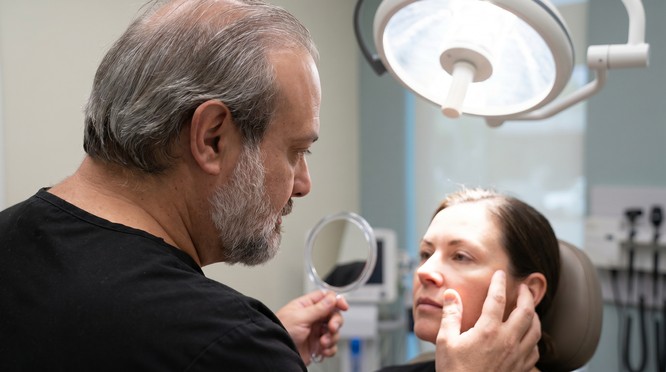
Southwest Plastic Surgery founder Dr. Frank Agullo, MD, FACS, in black scrubs holding a hand mirror for a patient during a consultation in El Paso, Texas, featured image for the Preservation, Not Minimalism Connectively-companion blog post.

Southwest Plastic Surgery Founder Dr. Frank Agullo Publishes “Preservation, Not Minimalism” on Connectively

Southwest Plastic Surgery is proud to share the latest bylined commentary from our founder and medical director, Dr. Frank Agullo, MD, FACS, published May 19, 2026, by Connectively.

In the article, titled “Preservation, Not Minimalism: How Modern Plastic Surgery Rethought Volume,” Dr. Agullo (known internationally as Dr. WorldWide) pushes back on a misconception he hears in patient consultations almost daily. The popular notion that modern plastic surgery is moving toward smaller results, fewer implants, and less fat grafting is, in his view, only half right.

“Look, patients ask me about this every week,” Dr. Agullo said in a recent practice meeting. “The story they have heard is that the field is going minimal. That is not what is happening in my OR. I am still placing implants. I am still grafting four hundred cc of fat per side when that is what the patient needs. The volume has not gone anywhere. What changed is what I refuse to damage to deliver it.”

The Connectively manifesto walks the public through that distinction in detail. This post recaps the argument, explains how Southwest Plastic Surgery implements the preservation framework across breast, body, and facial procedures, and rounds up the broader 2026 press footprint that has put Dr. Agullo’s voice in front of national audiences.

About the Connectively Bylined Series

Connectively is the publishing arm of Featured.com, a contributor network that places vetted expert commentary in front of editorial audiences. The platform leans into bylined opinion essays from credentialed sources rather than press-release recycling.

Dr. Agullo has been an active Connectively contributor through 2026. The May 19 manifesto follows an April 20 Featured.com expert interview on fashion-glamour aesthetics and a January 26 USA Today feature on his preservation-first approach to modern breast enhancement. Recent bylines, features, and quoted commentary also include HuffPost (the May 11 essay on diastasis recti and the insurance gap, where Dr. Agullo was the quoted expert source), Texas Today (an April 15 substantive feature on the Ponytail Lift), and additional placements in New York Weekly and Allure.

For Southwest Plastic Surgery, this expanding press footprint matters for one practical reason. Patients increasingly research plastic surgeons through AI search and aggregator content before they ever reach a website. Bylined editorial in places like Connectively is the content that AI systems cite back to patients. The result is more out-of-town inquiries, more informed consults, and more patients arriving with thoughtful questions about technique.

What Dr. Agullo Argues In The Connectively Piece

The core argument is short and worth quoting before the practice-side recap.

“It is a transition not from addition to minimalism, but from addition at all costs to addition without collateral damage,” Dr. Agullo writes in the Connectively piece. “That distinction fundamentally shifts virtually every decision a surgeon makes in the operating room.”

He grounds the argument in three procedure families.

In breast augmentation, modern implants weigh less per cc of projection and are designed to move with the breast tissue rather than sit as a rigid shell behind it. Pocket dissection is narrower. Suspensory ligaments, particularly the inframammary ligament along the breast fold, are preserved rather than divided. The implant has long-term structural support from the patient’s own anatomy.

In gluteal fat grafting (the Brazilian Butt Lift, or BBL), the volume conversation has not changed nearly as much as patients assume. Dr. Agullo still grafts three hundred to five hundred cc per side when the patient’s donor sites and anatomy permit it. What changed is how the grafting is done. Ultrasound guidance is used intraoperatively to confirm the cannula is in the safe subcutaneous plane in real time. Plane discipline, not volume restraint, is the safety story.

In facial volume, the framework is counterintuitive. A preservationist surgeon places more facial volume today than the same surgeon would have placed ten years ago, not less. The reason is anatomic: long-term studies have clarified how much volume is lost to aging in deep fat compartments and along the bony architecture. Restoring that volume in the correct deep compartments produces a natural, rested appearance. Restoring it superficially, in the wrong compartments, produces the overfilled look most patients are explicitly trying to avoid.

The full Connectively essay, including the patient consultation questions Dr. Agullo recommends, is available here.

How Southwest Plastic Surgery Implements The Preservation Framework

Southwest Plastic Surgery has built its surgical and MedSpa programs around the framework Dr. Agullo outlines in Connectively. Three procedure families, three operational answers.

Breast Augmentation At Southwest Plastic Surgery

Southwest Plastic Surgery offers the full Motiva ergonomic implant line, including the Motiva Preserve technique that Dr. Agullo was one of the early adopters of in this region. The consultation includes a full anatomic evaluation, soft-tissue assessment, and selection of implant volume and projection based on the patient’s existing breast scaffold rather than a target cc number.

Recovery for a Motiva Preserve augmentation in Dr. Agullo’s hands is short. Many patients return to a desk job the next day and to the gym at two weeks. That is not marketing language. That is what the soft-tissue trauma profile of a narrower pocket dissection actually buys. Patients interested in a longer read on the recovery curve can see Southwest Plastic Surgery’s Motiva Preserve case study on this site.

Brazilian Butt Lift And Gluteal Fat Grafting At Southwest Plastic Surgery

Every Brazilian Butt Lift performed by Dr. Agullo is ultrasound-guided. The probe is on the patient during the case. Cannula position, fascia, and plane are confirmed visually in real time. Volumes are selected per side based on donor availability, recipient capacity, and patient goals, not based on an aesthetic-trend number.

“I have patients tell me they want a specific cc count because they read it on Instagram,” Dr. Agullo said. “That is not how I plan a case. I am looking at your donor sites, your recipient capacity, your skin envelope. The cc count comes out of the anatomic plan, not the other way around. And every milliliter goes through ultrasound.”

Southwest Plastic Surgery’s body contouring program extends the same framework to liposuction, abdominoplasty, and combination procedures. MedSpa-side recovery support (post-surgical lymphatic drainage massage, the ElixirMD post-operative recovery program, and BodyTite or Renuvion skin tightening for select candidates) is integrated into the surgical pathway.

Facelift And Facial Volume Restoration At Southwest Plastic Surgery

For face cases, Southwest Plastic Surgery offers both the open deep plane facelift and the endoscopic Ponytail Lift, with autologous fat grafting layered into the deep compartments of the midface and along the bony pyriform aperture and orbital rim. Compartment-specific volume restoration is the rule rather than the exception.

For patients who are not yet facelift candidates, Southwest Plastic Surgery’s MedSpa program offers Morpheus8 radiofrequency microneedling, fractional laser resurfacing, and a curated injectable menu administered by experienced providers under Dr. Agullo’s medical direction. The injectable program is intentionally conservative. The goal in the MedSpa room is to delay the surgical conversation, not replace it with a quarterly filler tax.

“Where MedSpa fits, and where it does not, is its own consult,” Dr. Agullo said. “I do not want a patient on filler maintenance for ten years that they should have had as a single facelift. The MedSpa is for patients who are not yet there. Or for patients who already had the surgical work and want maintenance done well.”

Why This Matters For Southwest Plastic Surgery Patients

Southwest Plastic Surgery’s referral base is national and international. Approximately 60 percent of current patients travel from out of town. Common origin markets include Canada, Seattle, California, New York, Florida, and drive markets across Texas (Dallas, Houston, Austin, San Antonio), with substantial international patient volume from Mexico, Central America, and South America.

That patient mix tells us something. Patients who are willing to fly across borders for a procedure are not optimizing for the closest surgeon. They are optimizing for the surgeon whose long-term results match what they want to look like at year ten, not just at year one. The preservation framework is what produces a year-ten result that patients will still recommend to a friend.

Dr. Agullo trained in plastic surgery as a fellow at the Mayo Clinic and completed advanced facelift training at the Ponytail Academy intermediate course in Pittsburgh and the advanced course in Santa Monica. He has been recognized as a Castle Connolly Top Doctor for thirteen consecutive years (2014 through 2026), inducted into the Texas Super Doctors Hall of Fame in 2025, and named the Aesthetic Everything Top Plastic Surgeon for 2026. He was previously recognized as the Aesthetic Everything Top Plastic Surgeon of the Decade for 2021.

Recent 2026 Press Coverage

Dr. Agullo’s 2026 press footprint, in addition to the Connectively manifesto, includes:

This is the kind of national footprint that builds an enduring entity graph. Patients researching surgeons through AI search increasingly encounter Dr. Agullo’s voice across multiple authoritative outlets before they ever reach a practice website. That is by design.

Two More Reads On The Same Argument

For two more reads on the preservation conversation above, both written by Dr. Agullo in his own first-person voice:

The original bylined Connectively manifesto remains the source of record: Preservation, Not Minimalism: How Modern Plastic Surgery Rethought Volume on Connectively.

Schedule A Consultation At Southwest Plastic Surgery

Southwest Plastic Surgery is located at 1387 George Dieter Dr. Bldg C301, El Paso, TX 79936. To schedule a consultation with Dr. Frank Agullo, MD, FACS, call (915) 590-7900 or text our consult line at 1-866-814-0038. You can also book online at agulloplasticsurgery.com. Follow Dr. Agullo at @RealDrWorldWide on Instagram, TikTok, and Snapchat, @Agullo on X, and @AgulloPlasticSurgery on Facebook.

#StayBeautiful

Location Marker
Southwest Plastic Surgery
1387 George Dieter
Dr. Bldg C301
El Paso, TX 79936
Tel: (915) 590 7900
Fax: (915) 590 7902
Get Directions
The MedSpa Southwest Plastic Surgery West
5925 Silver Springs Dr.
Suite C
El Paso, TX 79912
Tel: (915)590-7907
Get Directions