En Español

« Back to Blog

After the Weight Comes Off: Dr. Agullo on the Body Lift and Why He Stages It

A body contouring consultation at Southwest Plastic Surgery in El Paso, soft daylight. Dr. Agullo discusses surgery after major weight loss.

Some of the most rewarding consultations at Southwest Plastic Surgery are with patients who have lost sixty, eighty, even a hundred pounds, whether through bariatric surgery, a GLP-1 medication, or sheer discipline. They did the hard part. What remains, Dr. Frank Agullo explains, is skin that lost its elasticity and will not bounce back, no matter how much they exercise.

Here is how he talks patients through it, offered as education rather than a plan for any one person.

Why the Skin Will Not Go Back

Once skin has been stretched that far for that long, Dr. Agullo says, the elastic fibers are spent. A patient can be at a great weight with a tiny waist and still have skin hanging from the breasts, the abdomen, the inner thighs, and the arms. That is not a discipline problem, it is a tissue problem, and the only thing that removes loose skin is surgery. That is exactly what body contouring after major weight loss is built to address.

The Breasts After Weight Loss

After massive weight loss the breast usually still has volume, Dr. Agullo notes, it is just hanging very low. Most of the time a lift alone gives a beautiful result, without an implant. He brings the nipple up, removes the excess skin, and places a mesh on the inside so the result does not rely on skin that has lost its elasticity. When the breasts are extremely low, he often advises against an implant in the same operation, because moving the nipple a long way up while adding an implant can compromise its blood supply. An implant is an easy second step later.

Tummy Tuck or All the Way Around?

With a standard tummy tuck, Dr. Agullo makes a low incision, removes the excess skin, pulls everything down tight, and repairs the muscles up the middle and along the sides for a corset effect and a smaller waist, combined with liposuction.

After massive weight loss, a lot of the looseness wraps around the sides and the back, so he often recommends the circumferential procedure, also called a lower body lift. The incision continues all the way around, letting him pull the skin down in front and lift the outer thigh and buttock at the same time. It is the most complete option when the laxity is not just in the front.

If the laxity is Dr. Agullo usually recommends
Mostly in the front A tummy tuck with liposuction
Wrapping around the sides and back A circumferential lower body lift
At the breasts A lift, often with internal mesh
On the inner thighs A thigh lift, staged carefully

The Honest Tradeoffs

Dr. Agullo is upfront about the limits. The circumferential lift pulls everything down and in, but heavy side-to-side laxity can leave some looseness up top, and removing that completely requires a vertical scar most patients prefer to avoid. He almost always leaves that as an optional second stage.

The thigh lift, he tells patients, is the hardest of these to recover from. Right where the tension pulls upward, the incision tends to open a little, almost every time. It is simply kept covered with gauze, closes on its own in about two to three weeks, and often needs no scar revision at all.

A procedure like this removes roughly ten pounds, so Dr. Agullo advises patients to reach a stable weight first, then maintain it for the best, longest-lasting result.

About Dr. Frank Agullo

Dr. Frank Agullo is the founder of Southwest Plastic Surgery in El Paso, Texas. He is double board-certified by the American Board of Plastic Surgery and the American Board of Surgery, a Fellow of the American College of Surgeons, and a Mayo Clinic plastic surgery fellowship alum. He is a Clinical Associate Professor of Plastic Surgery at Texas Tech University Health Sciences Center Paul L. Foster School of Medicine and has been named a Castle Connolly Top Doctor for thirteen consecutive years. Body contouring after massive weight loss, he says, is not one operation for everyone. It is a plan.

Ready to Talk?

If you have lost the weight and you are ready to deal with the skin, the team at Southwest Plastic Surgery will help you build a plan together.

For the surgeon’s editorial take, see Dr. Agullo’s essay on drworldwide.com. For the patient-facing version, see the companion post on agulloplasticsurgery.com.

Call (915) 590-7900, text 1-866-814-0038, or book online at swplasticsurgery.com. #StayBeautiful.

@RealDrWorldWide on Instagram, TikTok, and Snapchat, @Agullo on X, or @AgulloPlasticSurgery on Facebook.
Renuvion J-Plasma at Southwest Plastic Surgery: Tighter Skin Without a Bigger Scar

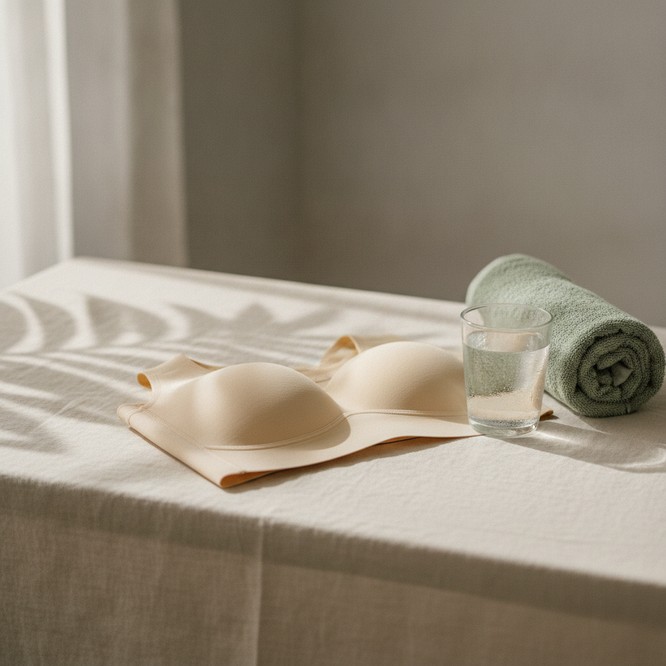
A folded compression garment, rolled towel and glass of water in a calm recovery room at Southwest Plastic Surgery, El Paso, illustrating recovery after liposuction with Renuvion J-Plasma.

Ask most people what liposuction does and they will tell you it removes fat. True, and only half the story. The other half is what happens to the skin once the fat underneath it is gone, and for decades that half was the part surgeons could not control.

At Southwest Plastic Surgery, the answer to that second half has been Renuvion J-Plasma, and it has been in daily use here since 2019.

Why Dr. Agullo Adopted It Early

Dr. Frank Agullo was one of the very first surgeons in the country to bring the technology in, and he did it because he kept running into the same wall.

“I saw a missing need after liposuction, which was skin tightening,” he told us. “We were able to perform liposuction effectively, but after deflating the subcutaneous tissue layer, many patients were left with loose skin, which required surgical excision. When we began using Renuvion, we noticed that the tissues would contract, and oftentimes the surgical excision of excess skin was not necessary anymore.”

Surgical excision is the polite phrase for cutting the loose skin away, which on the abdomen means a tummy tuck and on the upper arm means an arm lift. Both are excellent operations. Both leave a scar. Renuvion J-Plasma made it possible, in the right patient, to skip that trade entirely.

Seven years later he performs more than ten to twenty Renuvion J-Plasma cases per week, and according to Apyx Medical, the company that makes the device, he is among the ten highest-volume users in the world.

What Renuvion J-Plasma Is, in Plain English

Renuvion J-Plasma pairs helium plasma with radiofrequency energy and delivers both beneath the skin, through the same small openings the liposuction cannula already made. Nothing new is cut.

“Renuvion J-Plasma activates helium plasma and radiofrequency in the subcutaneous layers, making the connective tissue underneath shrink and contract, resulting in skin tightening and a smoother result,” Dr. Agullo said. “The helium plasma is important because it keeps the temperatures cool, which avoids burning.”

The connective tissue he is describing is the web of fibrous strands that anchors your skin down to the layers below it. Tighten that web, and the skin above comes along with it. The helium is what allows the energy to be delivered warm enough to do the job and still leave the tissue unharmed.

A New Study Backs Up What the Practice Sees

In March 2026, Huber and colleagues published a study in Plastic and Reconstructive Surgery Global Open. They went back through 113 patients from one surgeon’s practice, treated between October 2021 and October 2023. Seventy-three of them had power-assisted liposuction on its own. Forty had power-assisted liposuction followed by Renuvion J-Plasma. More than a year afterward, the patients themselves were surveyed using BODY-Q, a questionnaire validated for measuring exactly this kind of result.

At more than 12 months Liposuction alone Liposuction plus Renuvion J-Plasma
Satisfaction with excess skin 73.8 87.8
Satisfaction with the abdomen (no tummy tuck performed) 45.0 68.8
Needed a revision procedure 37.5 percent 12 percent
Went on to need an abdominoplasty 67.1 percent 30 percent
Complication rate 2.7 percent 2.5 percent

Fewer revisions, fewer tummy tucks, and the complication rate did not budge. The researchers are careful to point out that they were looking backward at cases already performed, that nobody was randomized, and that all of it came from one surgeon. That makes it a strong signal rather than a final word, and Dr. Agullo says the same thing when patients bring the study up. He also says it lines up with what he has watched happen in his own operating room for seven years running.

Who Is a Candidate at Southwest Plastic Surgery

This is where the consultation matters, and where Dr. Agullo is deliberately strict.

“In the right patient, one who does not have a lot of skin laxity or stretch marks and no rectus diastasis, the Renuvion J-Plasma can help keep patients away from an abdominoplasty and let them have just liposuction.”

That means three boxes have to be checked. Skin laxity is mild to moderate rather than severe. There are no significant stretch marks, because a stretch mark is a tear in the deeper layer of the skin and tightening underneath it will not repair it. And there is no rectus diastasis, the separation of the abdominal muscles that often follows pregnancy. When the muscle wall itself has come apart, the bulge is coming from the wall, not the skin, and a tummy tuck is the honest recommendation.

He is equally clear about where he stops:

“The most important thing is really knowing the limitations, and knowing that J-Plasma will not tighten extremely loose skin after pregnancy or massive weight loss. It is very powerful in contracting the skin, and it often keeps patients away from needing a brachioplasty or excision of back rolls.”

Where on the Body It Is Used

“I prefer to use Renuvion J-Plasma in the abdomen, the flanks, the upper back, the lateral chest, and around the knees,” Dr. Agullo said. “We also use it on the arms and thighs. I prefer not to use it in overly thin skin. If I encounter overly thin skin, I transition to BodyTite.”

Volume has taught him one more thing that does not appear in any brochure.

“There is a sweet spot in using J-Plasma, where more passes and more energy are not going to give you any further results. So being accurate in the number of passes and the energy for each area is extremely important to get the most benefit with the least risk.”

In other words, the skill is not in turning the device up. It is in knowing when to stop.

Recovery Does Not Get Longer

Patients often assume that adding a technology means adding downtime. At Southwest Plastic Surgery it does not.

“It’s important to know that Renuvion J-Plasma is not going to increase recovery times,” Dr. Agullo said. “The recovery itself and the protocol are the same with or without Renuvion J-Plasma when you have liposuction. We still use the garments, and we still use lymphatic massages.”

The compression garment stays. The post-surgical lymphatic massage schedule stays. Our med spa team handles that side of recovery, and patients who keep up with their massage appointments consistently move through swelling faster. The skin itself keeps tightening for months, so the six-week result is not the finish line.

Patients interested in the broader picture can read more about body contouring at Southwest Plastic Surgery or about the recovery services available through our med spa.

About Dr. Agullo

Dr. Frank Agullo is double board-certified by the American Board of Plastic Surgery and the American Board of Surgery, completed his plastic surgery fellowship at Mayo Clinic, and has served as a Clinical Associate Professor of Plastic Surgery at Texas Tech University Health Sciences Center Paul L. Foster School of Medicine since 2011. He has been named a Castle Connolly Top Doctor for thirteen consecutive years and is the founder of Southwest Plastic Surgery in El Paso, Texas.

#StayBeautiful

Ready To Talk?

To find out whether liposuction with Renuvion J-Plasma could get you the result you want without a larger scar, schedule a consultation. Call (915) 590-7900, text 1-866-814-0038, or book online at agulloplasticsurgery.com/appointments.

Read the patient-facing companion piece, Can Renuvion J-Plasma Keep You Out of a Tummy Tuck?, and Dr. Agullo’s candid surgeon-to-surgeon take, Seven Years of Renuvion J-Plasma, on his editorial site.

Follow along at @RealDrWorldWide on Instagram, TikTok, and Snapchat, @Agullo on X, or @AgulloPlasticSurgery on Facebook.

Tummy Tuck at Southwest Plastic Surgery: Muscle Repair, Smooth Results, and Second Opinions

Exam room at Southwest Plastic Surgery in El Paso, soft daylight, ultrasound screen visible. Tummy tuck consultation with Dr. Frank Agullo.

A surprising number of tummy tuck conversations at Southwest Plastic Surgery start with a patient who is not even sure she needs surgery. She has been told she just needs liposuction, or she has had a tummy tuck elsewhere and cannot get a straight answer about a bulge that will not go away. The practice was built to give that straight answer.

Dr. Frank Agullo tells patients the tummy tuck is the operation people most often confuse with liposuction, and the difference matters enormously. He also sees a steady stream of second opinions. The questions below are from real consultations, anonymized.

Will Liposuction Flatten the Stomach, or Is a Tummy Tuck Needed?

Dr. Agullo explains that when the abdominal muscles split apart during pregnancy or weight swings, liposuction does nothing for it. Liposuction only addresses what can be pinched. Relax those muscles and the bulge from the separation is still there, and a tummy tuck is the only thing that resolves it. The procedure flattens and tightens the abdomen and repairs the muscle wall, like building a corset on the inside. It delivers far more than liposuction alone, with the trade-off of a scar across the lower abdomen.

What a Tummy Tuck Repairs

Two problems liposuction and dieting cannot reach: loose, excess skin, and separated abdominal muscles, which Dr. Agullo calls rectus diastasis. He takes out the extra skin and stitches the muscles back together down the midline. That midline repair is what produces the flat, supported result.

The Second-Opinion Question: Is It a Seroma?

Few questions bring more patients to Southwest Plastic Surgery for a second opinion, and Dr. Agullo’s first move is always to look rather than guess. He uses an in-office ultrasound that color-codes the tissue.

Color on Ultrasound What It Means
Yellow Fat
Red Muscle
Blue Fluid

No blue on the screen means no fluid, which means no seroma. For patients who have been aspirated again and again with no real answer, that single image is a relief on its own. What is usually going on instead is residual diastasis. The scan shows the muscle on each side and the gap running between them. Up high, where the muscles nearly touch, that is normal. Lower down, where they stayed separated, the abdominal wall goes slack and pushes outward, and that is the fullness patients keep feeling.

How Residual Diastasis Is Repaired

If it is a true diastasis, Dr. Agullo explains, there is one real fix: go back in, open it up, and re-suture the muscles tighter. When a patient’s tissue is very elastic, he may add a mesh to back up the repair, an internal version of the binder worn after surgery. His preferred option is a mesh that dissolves and gets replaced by the patient’s own collagen, about as biocompatible as it gets. The alternative is traditional sutures laid down with a few extra reinforcing layers.

On the upper abdomen, Dr. Agullo notes that he does not aggressively liposuction it during the initial tummy tuck, because removing too much fat there can compromise the blood supply to the skin. Once everything is healed, a little liposuction later can safely refine that area.

Recovery and Med Spa Support

Recovery is where Southwest Plastic Surgery does a lot of its quiet work. As swelling settles, post-surgical massage can help the abdomen feel more comfortable and move fluid along, and the team builds the aftercare plan around each patient. If the bulge a patient is worried about turns out to be no hernia, no seroma, and no fluid collection, Dr. Agullo tells her plainly that it is not a health risk, and he would rather she decide with clear information than be rushed into surgery. For patients thinking about the whole post-pregnancy picture, the mommy makeover page covers the combined approach.

About Dr. Frank Agullo

Dr. Frank Agullo is the founder of Southwest Plastic Surgery in El Paso, Texas. He is double board-certified by the American Board of Plastic Surgery and the American Board of Surgery, a Fellow of the American College of Surgeons, completed a plastic surgery fellowship at the Mayo Clinic, and teaches as a Clinical Associate Professor at Texas Tech University Health Sciences Center Paul L. Foster School of Medicine. With abdominal surgery, he tells patients, the honest answer usually comes from imaging and an exam, not assumptions.

For the surgeon’s candid editorial take, see Dr. Agullo’s essay on drworldwide.com, and for the full patient walkthrough, see the companion post on agulloplasticsurgery.com.

Ready to Talk?

Whether it is a first tummy tuck or a worry about one done elsewhere, the team will look together. Call (915) 590-7900, text 1-866-814-0038, or book online at swplasticsurgery.com. #StayBeautiful.

@RealDrWorldWide on Instagram, TikTok, and Snapchat, @Agullo on X, or @AgulloPlasticSurgery on Facebook.

The Mommy Makeover at Southwest Plastic Surgery: The Right List, Not the Longest One

A confident silhouette in soft daylight at Southwest Plastic Surgery, El Paso, after a mommy makeover with Dr. Frank Agullo.

At Southwest Plastic Surgery, the mommy makeover consult often starts with Dr. Frank Agullo subtracting from the patient’s list rather than adding to it. “Mommy makeover” is a marketing name, he explains, not a single operation. His first job is to figure out which procedures actually serve a patient’s goals, and which ones they can skip. Sometimes the most useful thing he does is talk someone out of part of it.

Here is how Dr. Agullo walks patients through the decision.

What the Mommy Makeover Bundles

It is a list of procedures combined into one plan, not a fixed package. It can include a breast augmentation or whatever the breasts need, liposuction 360, a BBL (fat injections to the buttocks), and a tummy tuck. The team picks from that menu based on the individual. No one has to do all of it. The full overview lives on the practice’s mommy makeover page.

Being Unsure Is Normal

Dr. Agullo tells patients that walking in certain about one part and nervous about another is completely normal. Many are sure about the tummy tuck and anxious about implants, or the reverse. Being scared is not a reason to rush or to skip. It is a reason to slow down and go through each piece, one at a time, and patients are allowed to leave undecided.

Implant, Lift, or Both?

What Dropped What Dr. Agullo Considers
Mostly lost volume An implant may be enough
Nipple and tissue descended A lift, often with a modest implant
Somewhere in between A donut lift plus a modest implant

It depends on what dropped. If it is mostly lost volume, an implant can be enough. If the nipple and tissue have descended, an implant alone can make it look worse, and a lift enters the conversation. A donut lift, a small circle of skin around the areola, raises the nipple about an inch and re-centers it, and Dr. Agullo can place a modest implant through that same incision for upper fullness. The result is perkier and natural, with the scar hidden at the edge of the areola.

Liposuction or Tummy Tuck?

This is the conversation Dr. Agullo never lets a patient skip. Liposuction removes the fat that can be pinched. But if the abdominal muscles separated during pregnancy, a bulge remains when the muscles relax, and the only thing that repairs it is a tummy tuck. A tummy tuck flattens and tightens the abdomen and repairs the muscle, like a built-in corset. It is a bigger improvement than lipo alone, and it comes with a scar, a trade-off he lays out clearly.

Should a Patient Lose Weight First?

Stable matters more than low. If weight is still swinging, settling it first usually gives a better, longer-lasting contour. But a tummy tuck removes loose skin and repairs separated muscle, and dieting fixes neither, so the answer depends on what is actually bothering the patient. The team sorts that out at the exam.

One Surgery or Several?

Often it can be done in one, and that is usually the smarter choice: one anesthesia, one recovery, one block of time off. When planning combined surgery, Dr. Agullo weighs overall health and total operative time rather than stacking a wish list. If a list runs past the safe ceiling on operative time, he stages it into two calmer surgeries rather than one marathon, and he tells patients plainly when that is the safer route.

What Recovery Looks Like

At Southwest Plastic Surgery, patients are coached to expect the tummy tuck to drive the recovery in most mommy makeovers. It asks the most, with a real adjustment in the first week or two as the repaired muscle settles. The breast and liposuction portions ride alongside it without adding much.

The practice builds recovery support into the plan. In-house post-surgical massage keeps fibrosis from setting in, two Marena compression garments are provided and sized down as swelling drops, and a nurse helps with the first shower the next day. Most patients return to normal daily life sooner than they feared, with full exercise later. The advantage of combining procedures is doing this recovery once.

When Is the Right Time?

There is no universal answer, but there are good signals. A patient is done having children, or confident they are. Weight is stable. Help is lined up at home for the first week. And the reasons are the patient’s own, not a deadline someone else set. Dr. Agullo never wants a patient rushing a permanent decision to make an event, and he will say so if the timing is not right.

Recovery and Med Spa Support

Beyond the operating room, the practice’s Med Spa rounds out the mommy makeover journey, from skin care that complements the body work to maintenance treatments once healing is complete. The goal is a result that lasts, supported well after surgery day.

Talking Patients Out of What They Do Not Need

One thing that distinguishes Dr. Agullo’s approach is his willingness to remove items from a patient’s list. If liposuction alone will address a concern, he does not add a tummy tuck. If an implant will restore volume without a lift, he does not recommend longer scars. The practice measures a successful consult not by how many procedures get booked, but by how well the plan fits the patient. For many, the most reassuring part of the visit is hearing what they can safely skip.

About Dr. Frank Agullo

Dr. Frank Agullo is the founder of Southwest Plastic Surgery in El Paso, Texas. He is double board-certified by the American Board of Plastic Surgery and the American Board of Surgery, a Fellow of the American College of Surgeons, and completed his plastic surgery fellowship at the Mayo Clinic. He is a Clinical Associate Professor of Plastic Surgery at Texas Tech University Health Sciences Center Paul L. Foster School of Medicine and has been named a Castle Connolly Top Doctor for thirteen consecutive years.

Ready to Talk?

Let the team build the plan that fits you, not a template. For the surgeon’s editorial take, see Dr. Agullo’s essay on drworldwide.com. For the patient-facing walkthrough, see the companion post on agulloplasticsurgery.com.

Call (915) 590-7900, text 1-866-814-0038, or book online at swplasticsurgery.com. #StayBeautiful.

@RealDrWorldWide on Instagram, TikTok, and Snapchat, @Agullo on X, or @AgulloPlasticSurgery on Facebook.

Location Marker
Southwest Plastic Surgery
1387 George Dieter
Dr. Bldg C301
El Paso, TX 79936
Tel: (915) 590 7900
Fax: (915) 590 7902
Get Directions
The MedSpa Southwest Plastic Surgery West
5925 Silver Springs Dr.
Suite C
El Paso, TX 79912
Tel: (915)590-7907
Get Directions