En Español

« Back to Blog

Tummy Tuck at Southwest Plastic Surgery: Muscle Repair, Smooth Results, and Second Opinions
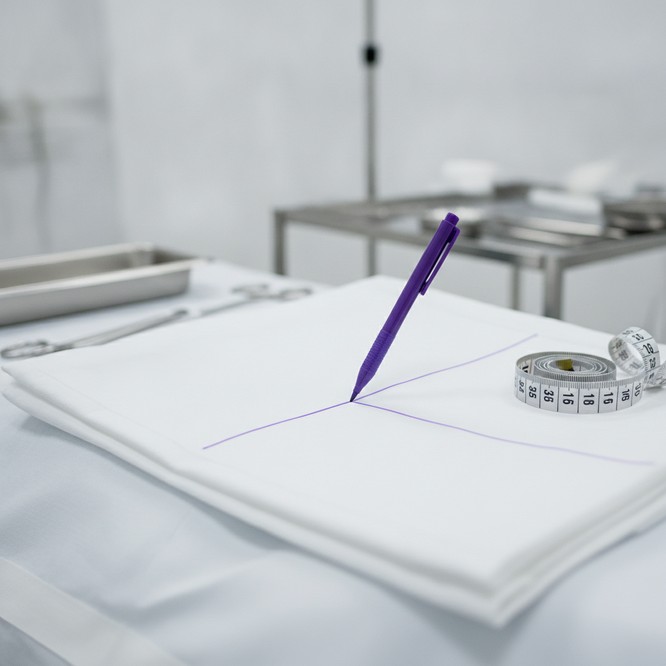
Exam room at Southwest Plastic Surgery in El Paso, soft daylight, ultrasound screen visible. Tummy tuck consultation with Dr. Frank Agullo.

A surprising number of tummy tuck conversations at Southwest Plastic Surgery start with a patient who is not even sure she needs surgery. She has been told she just needs liposuction, or she has had a tummy tuck elsewhere and cannot get a straight answer about a bulge that will not go away. The practice was built to give that straight answer.

Dr. Frank Agullo tells patients the tummy tuck is the operation people most often confuse with liposuction, and the difference matters enormously. He also sees a steady stream of second opinions. The questions below are from real consultations, anonymized.

Will Liposuction Flatten the Stomach, or Is a Tummy Tuck Needed?

Dr. Agullo explains that when the abdominal muscles split apart during pregnancy or weight swings, liposuction does nothing for it. Liposuction only addresses what can be pinched. Relax those muscles and the bulge from the separation is still there, and a tummy tuck is the only thing that resolves it. The procedure flattens and tightens the abdomen and repairs the muscle wall, like building a corset on the inside. It delivers far more than liposuction alone, with the trade-off of a scar across the lower abdomen.

What a Tummy Tuck Repairs

Two problems liposuction and dieting cannot reach: loose, excess skin, and separated abdominal muscles, which Dr. Agullo calls rectus diastasis. He takes out the extra skin and stitches the muscles back together down the midline. That midline repair is what produces the flat, supported result.

The Second-Opinion Question: Is It a Seroma?

Few questions bring more patients to Southwest Plastic Surgery for a second opinion, and Dr. Agullo’s first move is always to look rather than guess. He uses an in-office ultrasound that color-codes the tissue.

Color on Ultrasound What It Means
Yellow Fat
Red Muscle
Blue Fluid

No blue on the screen means no fluid, which means no seroma. For patients who have been aspirated again and again with no real answer, that single image is a relief on its own. What is usually going on instead is residual diastasis. The scan shows the muscle on each side and the gap running between them. Up high, where the muscles nearly touch, that is normal. Lower down, where they stayed separated, the abdominal wall goes slack and pushes outward, and that is the fullness patients keep feeling.

How Residual Diastasis Is Repaired

If it is a true diastasis, Dr. Agullo explains, there is one real fix: go back in, open it up, and re-suture the muscles tighter. When a patient’s tissue is very elastic, he may add a mesh to back up the repair, an internal version of the binder worn after surgery. His preferred option is a mesh that dissolves and gets replaced by the patient’s own collagen, about as biocompatible as it gets. The alternative is traditional sutures laid down with a few extra reinforcing layers.

On the upper abdomen, Dr. Agullo notes that he does not aggressively liposuction it during the initial tummy tuck, because removing too much fat there can compromise the blood supply to the skin. Once everything is healed, a little liposuction later can safely refine that area.

Recovery and Med Spa Support

Recovery is where Southwest Plastic Surgery does a lot of its quiet work. As swelling settles, post-surgical massage can help the abdomen feel more comfortable and move fluid along, and the team builds the aftercare plan around each patient. If the bulge a patient is worried about turns out to be no hernia, no seroma, and no fluid collection, Dr. Agullo tells her plainly that it is not a health risk, and he would rather she decide with clear information than be rushed into surgery. For patients thinking about the whole post-pregnancy picture, the mommy makeover page covers the combined approach.

About Dr. Frank Agullo

Dr. Frank Agullo is the founder of Southwest Plastic Surgery in El Paso, Texas. He is double board-certified by the American Board of Plastic Surgery and the American Board of Surgery, a Fellow of the American College of Surgeons, completed a plastic surgery fellowship at the Mayo Clinic, and teaches as a Clinical Associate Professor at Texas Tech University Health Sciences Center Paul L. Foster School of Medicine. With abdominal surgery, he tells patients, the honest answer usually comes from imaging and an exam, not assumptions.

For the surgeon’s candid editorial take, see Dr. Agullo’s essay on drworldwide.com, and for the full patient walkthrough, see the companion post on agulloplasticsurgery.com.

Ready to Talk?

Whether it is a first tummy tuck or a worry about one done elsewhere, the team will look together. Call (915) 590-7900, text 1-866-814-0038, or book online at swplasticsurgery.com. #StayBeautiful.

@RealDrWorldWide on Instagram, TikTok, and Snapchat, @Agullo on X, or @AgulloPlasticSurgery on Facebook.

Breast Reduction at Southwest Plastic Surgery: Relief, Honest Limits, and Recovery

Consultation at Southwest Plastic Surgery in El Paso, soft daylight, simulation on screen. Breast reduction consultation with Dr. Frank Agullo.

By the time many women reach Southwest Plastic Surgery for a breast reduction, they have tried everything else. Better bras. Physical therapy. Strength work for the back. The pain in the neck and shoulders keeps coming back, because none of those things change the weight that is causing it.

Dr. Frank Agullo tells patients this is one of the most satisfying operations he performs, because it fixes a genuine physical problem and not only a cosmetic one. It also carries a few honest limits that the practice makes sure every patient understands before scheduling. The questions below are from real consultations, anonymized.

How the Reduction Works

Dr. Agullo explains that a reduction is really a lift and a reduction happening together. The patient ends up with a scar around the areola, one dropping down to the fold, and one along the fold itself. Working through those, he raises the breast and removes tissue, usually a few hundred grams per side. A simulation shows the smaller, lighter result beforehand, with less weight tugging at the neck and back. That lighter load is what eases the pain more than anything else.

How Much Can Be Removed

There is a ceiling, and Dr. Agullo tells patients the reason is worth understanding. The nipple and areola have to keep their blood supply, so he cannot take out an unlimited amount. Remove too much and the blood stops reaching the nipple. So he works in a safe middle zone, aiming for the most relief he can responsibly provide.

The Weight Question

Patients often ask whether they should lose weight first. Dr. Agullo explains that the breast has two tissues that behave very differently.

Tissue Type Behavior With Weight Loss
Fat tissue Shrinks with diet and weight loss
Glandular tissue Does not shrink with weight, and is sometimes still growing

If a patient’s BMI is in the obese range, losing weight first helps her feel lighter on top and can reduce the breast a little. But if she has a lot of glandular tissue, her breast size will not change much with weight loss, which is exactly why surgery is the answer for many women. And if a patient plans to lose a significant amount, Dr. Agullo prefers to operate when she is close to her goal, because reducing first and then losing a lot of weight can let things sag again.

Adding Arm Contouring

Patients frequently ask about treating the arms at the same time. Dr. Agullo often does this with liposuction plus BodyTite to tighten the skin, blending into the side of the chest and the back so the patient does not look heavy on top. When the skin is healthy, it responds very well.

The Risks Dr. Agullo Always Discusses

Two, every time. There is a risk of losing some nipple sensation, less than ten percent but possible. And there is a small risk that the nipple and areola do not get enough circulation, in which case some of that tissue can be lost. That risk is under one percent, very low, but patients should always know it is possible. On breastfeeding, the breast tissue stays connected to the nipple, so in theory it should remain possible, though even women who have never had surgery cannot always know in advance.

Surgery, Recovery, and Med Spa Support

The full procedure runs about four to four and a half hours under general anesthesia, and the patient goes home the same day. Plan on roughly a week to return to calm activity and four weeks before exercise, lifting, running, or swimming. For comfort and swelling as the body settles, post-surgical massage at Southwest Plastic Surgery can help during recovery, and the team builds the aftercare plan around each patient. If a patient turns out to need a lift more than a reduction, that lives on the breast lift page.

About Dr. Frank Agullo

Dr. Frank Agullo is the founder of Southwest Plastic Surgery in El Paso, Texas. He is double board-certified by the American Board of Plastic Surgery and the American Board of Surgery, a Fellow of the American College of Surgeons, completed a plastic surgery fellowship at the Mayo Clinic, and is a Clinical Associate Professor of Plastic Surgery at Texas Tech University Health Sciences Center Paul L. Foster School of Medicine. Breast reduction changes lives, he tells patients, but it has real anatomic limits, and he would rather a patient understand the trade-offs up front than be surprised later.

For the surgeon’s candid editorial take, see Dr. Agullo’s essay on drworldwide.com, and for the full patient walkthrough, see the companion post on agulloplasticsurgery.com.

Ready to Talk?

If the weight of your breasts is wearing on your back and neck, relief is a real option. Call (915) 590-7900, text 1-866-814-0038, or book online at swplasticsurgery.com. #StayBeautiful.

@RealDrWorldWide on Instagram, TikTok, and Snapchat, @Agullo on X, or @AgulloPlasticSurgery on Facebook.
Labiaplasty at Southwest Plastic Surgery: A Private Procedure, Handled With Care

Welcoming, private consultation room at Southwest Plastic Surgery in El Paso, soft daylight. Labiaplasty consultation with Dr. Frank Agullo.

Some appointments at Southwest Plastic Surgery start with the door closing a little more deliberately than usual. The patient wants privacy before she even sits down, and the team gives it to her without making a thing of it. That is by design. Labiaplasty is one of the most private procedures Dr. Frank Agullo performs, and the practice is built to make it an ordinary, judgment-free conversation.

It also comes up far more often than patients assume. Dr. Agullo tells patients that almost everyone walks in nervous and walks out wondering why they waited so long to ask. The questions below are drawn from real consultations and anonymized.

Is It Cosmetic, or Can It Help With Discomfort?

Dr. Agullo tells patients it is frequently both, and both reasons are legitimate.

Excess labial tissue can cause discomfort with certain clothing and with activity, and some patients also deal with recurrent irritation. When it bothers a patient physically and she does not love the appearance, those are two valid reasons that do not have to be ranked against each other. No one at the practice asks a patient to justify which one matters more.

How Dr. Agullo Performs the Procedure

He trims the excess tissue so everything is smooth and deliberately leaves some behind, rather than chasing the smallest possible result.

There is one detail he makes sure every patient hears first. When the labia are trimmed, the clitoral hood can end up looking like it protrudes, because it is no longer in proportion with the tissue around it. To avoid that, Dr. Agullo usually recommends reducing the clitoral hood a little at the same time, so everything sits flush. For a patient who starts with very little tissue, a small amount may still show afterward, but far less than before.

What About Sensation?

This is the question patients ask most, and Dr. Agullo addresses it directly. He is removing tissue, and although small nerves are cut in the process, the nerve stays on the surface right where the cut is made, so loss of sensation is not something his patients report afterward. Patients keep the sensation they had. And because the clitoris ends up with a little less tissue around it, full sensation is often actually heightened.

Anesthesia and Recovery, at a Glance

The procedure can be done under IV sedation, similar to a colonoscopy. An IV is placed, the patient is brought into a deep sleep, the area is numbed with local anesthesia, and the procedure is performed. The patient does not feel or remember anything. General anesthesia is available on request but is not necessary. The procedure itself is quick, under forty-five minutes.

Recovery Point What to Expect
Pain Most patients report little; some soreness
Comfort aid Exparel numbs the area about three days
Spotting A little, for a couple of days
Back to work About five days, nothing strenuous, under fifteen pounds
Exercise Four weeks
Intercourse Four weeks while everything heals
Final result Visible right away; settles by four to six weeks

Will a Keloid Form There?

Patients worry about this, often because they keloid elsewhere on the body. Dr. Agullo reassures them that he has never seen a keloid form in this area. Keloids tend to appear on the ankles, shoulders, ears, and chest, where there is tension and movement. The genital area is different tissue, more mucosa and skin, and is not under tension, so it is simply not where keloids form.

How the Med Spa Supports Healing

Recovery from a private procedure is still recovery, and Southwest Plastic Surgery treats it that way. The Med Spa and laser services support skin quality and overall healing, and for patients combining labiaplasty with body work, post-surgical massage can ease swelling in those other areas. The team builds an aftercare plan around the whole patient, not just the surgical site.

On symmetry, early unevenness is usually just swelling, since one side tends to swell differently than the other. Like breasts, there are always slight natural differences, and Dr. Agullo makes them as even as he can. He does not finish a case until he is satisfied with it, and his revision policy means he does not charge for a touch-up itself, only the operating room and anesthesia time.

About Dr. Frank Agullo

Dr. Frank Agullo is the founder of Southwest Plastic Surgery in El Paso, Texas. He is double board-certified by the American Board of Plastic Surgery and the American Board of Surgery, a Fellow of the American College of Surgeons, completed a plastic surgery fellowship at the Mayo Clinic, and has been named a Castle Connolly Top Doctor for thirteen consecutive years. With a private procedure like this, he tells patients, the two things that matter most are an honest conversation about what is realistic and a result that feels comfortable and natural.

For the surgeon’s candid editorial take, see Dr. Agullo’s essay on drworldwide.com, and for the full patient walkthrough, see the companion post on agulloplasticsurgery.com.

Ready to Talk?

If this is something you have quietly wondered about, you can ask privately at Southwest Plastic Surgery. Call (915) 590-7900, text 1-866-814-0038, or book online at swplasticsurgery.com. #StayBeautiful.

@RealDrWorldWide on Instagram, TikTok, and Snapchat, @Agullo on X, or @AgulloPlasticSurgery on Facebook.

Recovery and Aftercare at Southwest Plastic Surgery: Half the Result Happens After Surgery

Recovery essentials in soft daylight at Southwest Plastic Surgery, El Paso, a compression garment and water. Aftercare guidance with Dr. Frank Agullo.

At Southwest Plastic Surgery, Dr. Frank Agullo tells patients something they do not always expect to hear: a good result is half operation and half aftercare. The patients who do their massages, wear their garments, and call early when something feels off are the ones who heal beautifully. That is why the practice builds recovery support into every plan rather than leaving patients to figure it out alone.

These are the recovery questions the team answers most, drawn from real follow-up visits.

Is This Firmness Normal?

Usually, yes. After surgery, firm or hard areas are fibrosis and edema, a normal part of healing. Dr. Agullo has patients massage these areas, and the firmness keeps softening over about three months. It is far better at three months than at three weeks. What is not routine is new, painful, red, or rapidly changing firmness, which is a reason to call the practice.

A Stitch Is Poking Out

That is usually a suture working its way to the surface, which is common and minor. If a small area opens where a suture extruded, the team keeps it covered, sometimes with a silver antimicrobial dressing, and it heals. It does not mean something went wrong. Rarely an incision needs a few extra sutures, about one patient in fifty.

How the Massages Work

Aftercare Step What the Practice Provides
Lymphatic massage In-house tech, 2 to 3 times a week for ~4 weeks
Abdominal drain Clears trapped fluid during massage
Compression Two Marena fajas, sized down as swelling drops
Facial recovery ElixirMD LED therapy from day seven

For body work, the lymphatic massages are how the practice keeps fibrosis from becoming a problem. An in-house tech sees patients two or three times a week for about four weeks. In the abdomen, Dr. Agullo leaves a small drain so trapped fluid clears quickly during massage, because trapped fluid is what creates lumpiness.

Garments and Showering

The practice provides two Marena fajas with clips so the team can size patients down as swelling drops. They are worn four weeks, off twice a day to shower and let the skin breathe. If a standard post-op bra is uncomfortable, a supportive alternative is often fine, because comfort that keeps a patient in compression beats a “correct” garment they refuse to wear. Patients shower the next day, and a nurse visits to help with that first shower, check healing, give IV fluids if needed, and answer questions.

Nausea, Pain, and Who Is in the Room

If a patient tends to get nauseous from anesthesia, a pill called Emend taken the night before usually prevents it. Facial procedures barely hurt. Liposuction feels like going back to the gym after a long break, sore with movement but tolerable, and easier than a C-section.

The anesthesia is run by CRNAs who are army and combat trained and have been with Dr. Agullo over ten years. The surgical techs are certified first assist and have been with the practice since 2012. After surgery, patients get a wristband with a 24-hour line to the nurses or nurse practitioner.

What Speeds Healing

Several recovery supports are available through the practice and its Med Spa. NAD infusions with glutathione before and after surgery help clear the anesthesia. Post-op peptides, GLOW for face work and GLOK for body, help with inflammation and tissue regeneration. Arnica and bromelain help with bruising. And for facial recovery, ElixirMD LED therapy starting seven days out roughly doubles the speed of healing.

The Three Habits Behind a Smooth Recovery

Dr. Agullo sums up the patient’s role in three habits: do the massages, wear the garment, and call early. The patients who keep up with their post-surgical massage are the ones whose tissue stays soft and even, while skipping it is what leads to fibrosis that has to be broken up months later.

The garment is the mold the new contour sets into, not a fashion choice, which is why the practice provides two and sizes them down as swelling drops. And calling early matters because nearly everything that worries a patient in the first weeks is normal, and the rare exception is easiest to address when caught quickly.

Preparing Before Surgery Day

The smoothest recoveries start before surgery. The team coaches patients to set up at home in advance: loose clothing that does not require raising the arms overhead, water and easy meals stocked, elevation arranged if the procedure calls for it, and help lined up for the first few days. Arranging support ahead of time is far easier than scrambling for it afterward, and it lets the patient focus on healing.

When Can a Patient Travel or Return to Work?

This is a per-patient answer rather than a fixed timeline. Dr. Agullo prefers to clear patients based on how they are actually healing, not a generic chart. Patients are encouraged to mention upcoming trips early so the team can plan around them, including precautions for long flights. After surgery, every patient receives a wristband with a 24-hour line to the nurses or nurse practitioner, so questions never have to wait.

About Dr. Frank Agullo

Dr. Frank Agullo is the founder of Southwest Plastic Surgery in El Paso, Texas. He is double board-certified by the American Board of Plastic Surgery and the American Board of Surgery, a Fellow of the American College of Surgeons, and completed his plastic surgery fellowship at the Mayo Clinic. He is a Clinical Associate Professor of Plastic Surgery at Texas Tech University Health Sciences Center Paul L. Foster School of Medicine and has been named a Castle Connolly Top Doctor for thirteen consecutive years.

Ready to Talk?

Recovery questions deserve real answers from the surgeon, not the internet. For the surgeon’s editorial take, see Dr. Agullo’s essay on drworldwide.com. For the patient-facing walkthrough, see the companion post on agulloplasticsurgery.com.

Call (915) 590-7900, text 1-866-814-0038, or book online at swplasticsurgery.com. #StayBeautiful.

@RealDrWorldWide on Instagram, TikTok, and Snapchat, @Agullo on X, or @AgulloPlasticSurgery on Facebook.

Location Marker
Southwest Plastic Surgery
1387 George Dieter
Dr. Bldg C301
El Paso, TX 79936
Tel: (915) 590 7900
Fax: (915) 590 7902
Get Directions
The MedSpa Southwest Plastic Surgery West
5925 Silver Springs Dr.
Suite C
El Paso, TX 79912
Tel: (915)590-7907
Get Directions