En Español

« Back to Blog

Removal, Exchange, or Going Smaller: How Dr. Agullo Counsels Patients on Their Implants
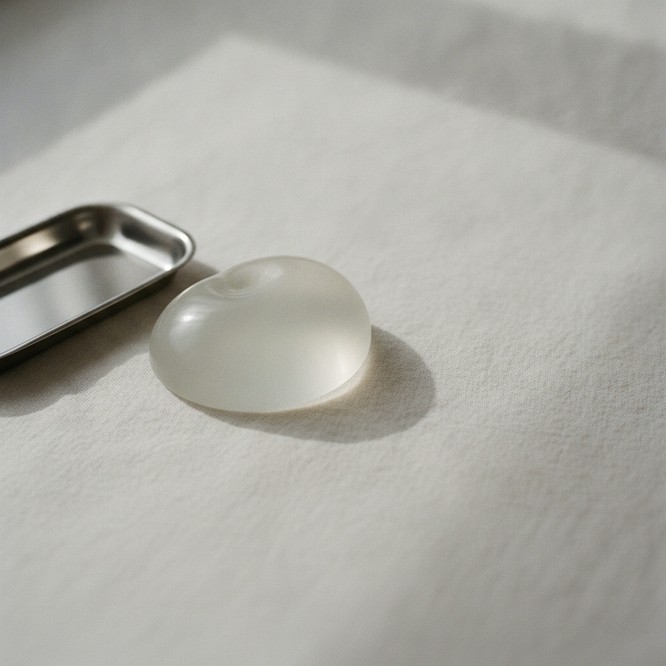
A breast implant removal consultation at Southwest Plastic Surgery in El Paso, soft daylight. Dr. Agullo counsels a patient on removal, exchange, and going smaller.

A decade ago, most patients who came to Southwest Plastic Surgery about their breasts wanted to go bigger. Today, a striking number want the reverse. They have carried their implants ten or twelve years, they have read something online, and they want a clear answer about whether to remove, exchange, or simply go smaller.

Dr. Frank Agullo walks each of them through the same honest framework. What follows is that conversation, offered as education rather than a verdict on any one case.

What Dr. Agullo Tells Patients About Breast Implant Illness

If you have lived with your implants for years and felt fine, Dr. Agullo says, you are most likely never going to develop a problem. It is uncommon. Across the thousands of augmentations he has performed, only ten or twelve women have asked to have them removed because they felt the implants were affecting them, and most of those women did feel better afterward.

He is candid about the uncertainty. A lot of the time, he explains, it is hard to know whether the implants caused it or whether ordinary aging did, since aches and fatigue arrive on their own as the years pass. The science is still developing, so he will not hand a patient a certainty the evidence does not support, and he will not talk anyone out of removal who genuinely wants it.

Why Textured Implants Get a Closer Look

Textured implants have been linked in a small number of patients to a specific type of lymphoma. The risk is low, on the order of one in a few thousand, and it is tied to the textured surface rather than to smooth implants.

For that reason, Dr. Agullo tells patients with textured implants that exchanging them for smooth ones is reasonable even when everything feels fine. If a risk can be sidestepped, he would rather sidestep it.

What Removal Does to the Shape

This is the part that surprises patients most. Remove an implant of any real size, Dr. Agullo explains, and the breast drops a cup size or more and tends to sag, because the implant was holding up volume the skin had stretched to accommodate.

That is why removal alone is rarely the full plan. Most patients get a better result with a breast lift at the same time, which raises and tightens everything. If a patient still wants a little fullness on top, fat grafting can be added a few months later, once the pocket has closed off.

The Options at Southwest Plastic Surgery

What the Patient Wants The Path at the Practice
Implants out, simplest plan Removal, often paired with a lift
Smaller but still shaped Remove, lift, small implant
Soft, natural fullness Lift now, fat grafting later
Textured shell, no symptoms Exchange to a newer implant
Touch-ups over time Injectables and follow-up at the Med Spa

Going Smaller, on Purpose

Many patients choose the middle path. Dr. Agullo removes the large old implant, performs the lift, and places a small one, sometimes only 150 or 200 cc, mostly to hold a little cleavage and shape. A small implant is more predictable than fat, gives a reliable size, and does not change when a patient’s weight goes up and down.

The Motiva implants Dr. Agullo places now carry a very low rupture rate, under half a percent, and a very low rate of capsular contracture, also around half a percent, compared with ten to fifteen percent for some older implants. Because of that, he no longer tells patients they must swap every ten years, and he often adds an internal mesh to hold the result in place.

About Dr. Frank Agullo

Dr. Frank Agullo is the founder of Southwest Plastic Surgery in El Paso, Texas. He is double board-certified by the American Board of Plastic Surgery and the American Board of Surgery, a Fellow of the American College of Surgeons, and a Mayo Clinic plastic surgery fellowship alum. He is a Clinical Associate Professor of Plastic Surgery at Texas Tech University Health Sciences Center Paul L. Foster School of Medicine and has been named a Castle Connolly Top Doctor for thirteen consecutive years. Removal and exchange is more involved than a first-time augmentation, which is why he examines each patient, reviews imaging, and is honest about how the shape will change before making a plan.

Ready to Talk?

If you are weighing whether to remove, exchange, or downsize your implants, the team at Southwest Plastic Surgery will help you build a plan around what you actually want.

For the surgeon’s editorial take on this topic, see Dr. Agullo’s essay on drworldwide.com. For the patient-facing version, see the companion post on agulloplasticsurgery.com.

Call (915) 590-7900, text 1-866-814-0038, or book online at swplasticsurgery.com. #StayBeautiful.

@RealDrWorldWide on Instagram, TikTok, and Snapchat, @Agullo on X, or @AgulloPlasticSurgery on Facebook.
Breast Implant Revision at Southwest Plastic Surgery: Understanding Capsular Contracture

A consultation at Southwest Plastic Surgery in El Paso reviewing breast imaging on a screen. Breast implant revision with Dr. Frank Agullo.

A meaningful share of the breast work at Southwest Plastic Surgery in El Paso is revision, not first-time augmentation. Patients arrive years after surgery done elsewhere and describe a familiar set of changes. One breast riding high. A new firmness. A feeling that the implant has shifted. Or simply the milestone of a decade passing and the wish for an update.

Dr. Frank Agullo treats these as mechanical problems with mechanical solutions. Here is how he explains the most common ones.

What a High, Firm Breast Often Means

When a patient describes one side sitting high and feeling firm, almost like a lump, it is usually a capsular contracture.

Whenever an implant is placed, the body forms a capsule of scar tissue around it. That is normal and helpful, because it keeps the implant in position. Sometimes, though, the capsule tightens and hardens, driven by inflammation or an old low-grade infection, and it pulls the implant high and firm. When the contracture is severe it can hurt, so the absence of pain is a good sign. It can appear long after the original surgery, which often surprises patients.

How Dr. Agullo Repairs It

The repair is more than an implant swap. Dr. Agullo removes the hardened capsule, takes out the old implant, and places a new one. When the patient is switched to a Motiva implant, the risk of recurrence drops below one percent, because the Motiva nano-surface provokes a much lower inflammatory response.

To lower the risk further, he often places a mesh, an internal-bra layer of support, over the area, which brings recurrence close to zero. If a patient wants to change size at the same time, that is usually possible through the same incision.

A Quick Guide to Revision Decisions

What a Patient Notices What It Often Means The Usual Approach
One side high and firm Capsular contracture Remove capsule, exchange implant, often add mesh
Implants past ten years Older-generation wear Exchange to Motiva, reassess size and position
New asymmetry over weeks Worth imaging first Ultrasound or MRI, then a plan
Multiple prior surgeries Disturbed tissue planes Careful planning, honest expectations

Old Implants and Multiple Past Surgeries

If a patient is at the ten-year mark with older-generation implants, an exchange is reasonable, and it is a good moment to reassess size and position. Dr. Agullo often recommends moving to a Motiva, which lasts longer and carries far less contracture risk.

A long surgical history does not close the door. Dr. Agullo treats patients whose first operation was decades ago with several since. More history simply means more careful planning and an honest conversation about what is realistic.

Why the Implant Surface Matters

When patients ask why a Motiva exchange lowers the recurrence rate so much, the answer is the surface. The Motiva implants have a nano-surface called SmoothSilk that provokes the lowest inflammatory response of any implant. Capsular contracture is fundamentally an inflammatory problem, since the capsule hardens because the body keeps reacting to the implant over time. When the implant barely provokes a reaction, the capsule that forms stays soft and thin. That is the mechanism behind a sub-one-percent recurrence rate, and it is why Dr. Agullo rarely puts an older-generation implant back during a revision.

A Revision Is Often an Upgrade

Many patients arrive bracing for simple damage control and are surprised to learn a revision is often a chance to end up with a better result than the original. The Motiva implants are soft, the gummy bear type, and move with the body, settling into a natural teardrop shape when a patient stands. While correcting the contracture, Dr. Agullo can also address a size the patient never loved, a position that sat too high, or an asymmetry that was present from the beginning, usually through the same incision.

Recovery From a Revision

Recovery varies more than a first-time augmentation, because the work inside is more involved. A straightforward implant exchange often recovers within a week of feeling close to normal, while a full capsule removal with mesh support is a larger operation that asks for a more careful few weeks. Dr. Agullo gives each patient a realistic timeline after examining them and reviewing imaging, and the practice offers post-surgical massage to support comfort and healing as recovery progresses.

Imaging and Combining Procedures

If a patient feels a change, an ultrasound or MRI helps confirm whether the implants are intact and whether the issue is a contracture, scar, or something needing more attention. Dr. Agullo reviews imaging before making a plan. A firm, high, or newly asymmetric breast, especially a change over a few weeks, is worth an evaluation.

If the breast has dropped, a breast lift can be combined with the revision. For comfort and healing afterward, the practice offers post-surgical massage as recovery progresses.

About Dr. Frank Agullo

Dr. Frank Agullo is the founder of Southwest Plastic Surgery in El Paso, Texas. He is double board-certified by the American Board of Plastic Surgery and the American Board of Surgery, a Fellow of the American College of Surgeons, completed a plastic surgery fellowship at the Mayo Clinic, and has been a Castle Connolly Top Doctor for thirteen consecutive years. He is also a Clinical Associate Professor of Plastic Surgery at Texas Tech University Health Sciences Center Paul L. Foster School of Medicine. Revision is harder than a first augmentation because the tissue planes are already disturbed, which is why he plans it carefully rather than rushing.

See the Other Versions

For the surgeon’s editorial take, see Dr. Agullo’s essay on drworldwide.com. For the patient-facing question-and-answer version, see the companion post on agulloplasticsurgery.com.

Ready to Talk?

If something feels high, hard, or out of place, do not wait. Bring any prior records and come in to Southwest Plastic Surgery.

Call (915) 590-7900, text 1-866-814-0038, or book online at swplasticsurgery.com. #StayBeautiful.

@RealDrWorldWide on Instagram, TikTok, and Snapchat, @Agullo on X, or @AgulloPlasticSurgery on Facebook.

Location Marker
Southwest Plastic Surgery
1387 George Dieter
Dr. Bldg C301
El Paso, TX 79936
Tel: (915) 590 7900
Fax: (915) 590 7902
Get Directions
The MedSpa Southwest Plastic Surgery West
5925 Silver Springs Dr.
Suite C
El Paso, TX 79912
Tel: (915)590-7907
Get Directions