En Español

« Back to Blog

The Collagen Aisle, Ranked: What Our Patients Ask Us Every Week

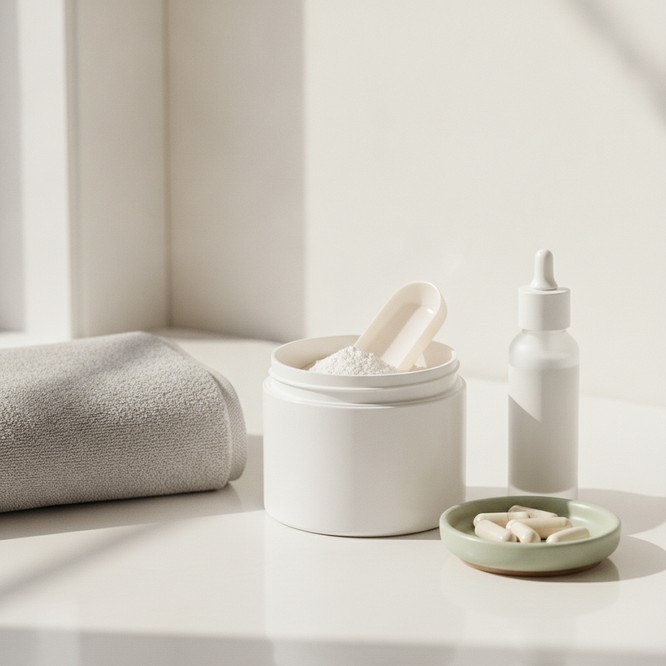
Collagen powder, capsules, gummies, and a serum bottle arranged on a bright counter, illustrating collagen supplement guidance from Southwest Plastic Surgery in El Paso.

The clinic sees more collagen ingestibles arrive than the average pharmacy. First off, a giant tub of unflavored collagen powder a patient has been using since January, who insists he takes it after hearing a lady down the street rave about it. Then, an electric-green gummy pouch discovered inside the purse of another patient at the point of signing out.

So. Will it achieve anything useful, you think?

Flow Space interviewed Dr. Frank Agullo on precisely that subject, powders versus serums versus capsules versus gummies. Here is the full answer he gave.

Why Patients Start Looking in the First Place

Actually, the ads are not pushing the supplement. It is people standing in front of their mirror and watching it go bad there.

Below the epidermis entirely, collagen forms the framework for your skin and maintains the structure of the dermis. The production of collagen in both men and women generally begins to drop off in the early twenties, at rates not easily noticeable. Women experience a far more pronounced collagen decline during menopause.

“In the first five years after menopause, women lose roughly 25 to 30 percent of the collagen in their skin,” Dr. Agullo says. “That is not a lifetime figure. That is five years. It explains why so many patients tell me their skin seemed to change all at once.”

Lower your expectations. Your focus should be on retaining what you currently have. Rebuilding 25 percent of your dermal scaffolding from a scoop of powder is not a reasonable outcome.

Powder Is the Only Format With Real Human Data

That shelf? Four formats, and only one has clinical trials.

Studies usually range from around 2.5 to 10 grams of daily hydrolyzed collagen peptide consumption, which results in modest changes in the skin (improved hydration, improved elasticity) over 8 to 12 weeks. That means slightly better over the course of three months.

“Powder wins for a simple reason,” Dr. Agullo says. “A scoop delivers the dose the research actually studied. That turns out to be the hardest thing in the entire category.”

Capsules, Gummies, and the Sugar Problem

Capsule products still contain the peptides found in powder, but only a small fraction of the studied dosage. It takes so many capsules to actually ingest a dose that mirrors study requirements that it becomes infeasible for most people. Almost everyone who does take capsules ends up just popping two of them a day and feeling that they did enough, having ingested a small fraction of what the people in the study took. If capsules are your go-to, we instruct patients to read the label and consume the accurate dosage.

We specifically tell people to avoid the gummies. The reason should be stated out loud rather than just dissuading anyone with no rationale.

“The collagen content per gummy is low, and most of them carry added sugar,” Dr. Agullo says. “Sugar drives glycation, where sugar molecules bind to proteins and stiffen them. Collagen is one of those proteins. Glycated collagen is more brittle and less elastic. So the product delivers a little collagen while adding something that degrades the collagen you already have.”

Format Reaches the studied dose Limitation Our guidance
Powder Yes Mixing, taste The format we recommend
Capsule Rarely Underdosing is common Fine if the dose is real
Gummy No Low content, added sugar Skip it
Serum Not applicable Cannot reach the dermis Treat it as a moisturizer

What a Collagen Serum Is Really Doing

A collagen serum seems as valid as any cosmetic and remains one of the most misunderstood items in modern beauty culture.

That molecule is enormous, and keeping molecules that size out is exactly what our outer skin layer does. Collagen only sits on top and holds moisture to the skin.

It does work, but it is slight and does not last. Your skin holds water so it looks temporarily fuller, and as soon as it is no longer in use, the temporary fullness goes away.

A topical focused on promoting collagen production would use retinoids, an effective vitamin C serum, or particular peptides as its main ingredient. These are the signals that encourage cells to produce more collagen. Simply printing the word “collagen” on the bottle’s front does not signify anything.

The Free Habit That Outperforms the Whole Aisle

As a minimum baseline measure, prior to any discussion of supplements, we question the patient about their usage of sunscreen.

El Paso has clear skies most of the year. UV exposure does more damage that we can control than anything else, and that includes diet, smoking, and pollution as the other controllable factors. UV rays trigger enzymes to destroy collagen while at the same time inhibiting any new collagen production. That is the reason sun exposure ages your skin most here.

Wear broad-spectrum sunscreen daily, and that will do far more for collagen preservation than any supplement. That is most of it. Use a retinoid nightly. Vitamin C daily. Eat enough protein. Get real sleep. Eat way less sugar (glycation again).

The Treatments That Do What Supplements Cannot

The minute someone wants direct collagen building rather than support for what is already there, either our MedSpa division or the surgical division will handle it.

Sculptra works by stimulating your body to make more collagen over a few months. Microneedling creates controlled injuries in the skin with a needle pen, and radiofrequency microneedling is more efficient than the traditional kind. Lasers work on the surface and just below it to improve texture, firmness, and quality of skin, and they give your daily skincare regimen something better to build on.

If the worry is tissue drooping, not the skin itself, then forget about collagen treatments. They will not fix it, not even close. It is purely structural loss and requires a conversation about that issue.

Dr. Agullo completed his plastic surgery fellowship at the Mayo Clinic, holding board certification from both the American Board of Plastic Surgery and the American Board of Surgery. For 13 consecutive years he has been ranked among the Top Doctors by Castle Connolly. He says part of his job involves being forthright about what a supplement will and will not do for a patient.

The Short Version

Take the powder daily. Give it three months to see whether you like it or not.

Gummies are silly. Use the serum as you would a moisturizer, which is what it basically is. And what is actually going to help the collagen in your skin, and keep the lines away, is sunscreen every single day.

“Collagen is a nudge, not a lift,” Dr. Agullo says. “It is not a facelift in a scoop. But it is worth something, and in this category that is a real distinction.”

#StayBeautiful.

Dr. Agullo’s comments appeared in Flow Space, “Powders, Serums, Gummies. What’s the Best Way to Get Your Collagen?” by Maggie Ryan, July 16, 2026. The surgeon’s own commentary version is on drworldwide.com, and the patient-education version is on agulloplasticsurgery.com.

Ready to Talk?

Want help building a skin plan? Or just a straight answer on whether a supplement will meet your goals? Let us walk you through it.

Call (915) 590-7900, text 1-866-814-0038, or book online at agulloplasticsurgery.com.

@RealDrWorldWide on Instagram, TikTok, and Snapchat, @Agullo on X, or @AgulloPlasticSurgery on Facebook.
Reading the Back of the Jar: How We Help Patients Choose a Collagen Cream

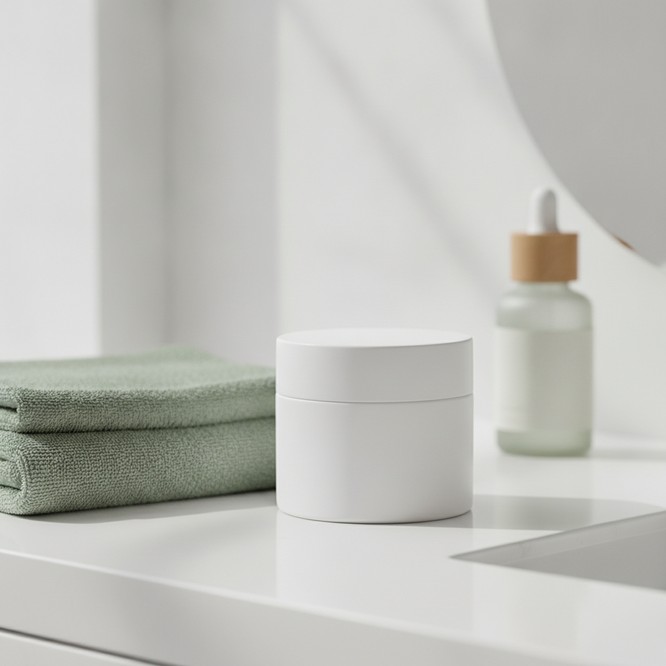
A collagen face cream jar turned to reveal its ingredient list beside a folded towel on a bright vanity, illustrating skincare guidance at Southwest Plastic Surgery in El Paso.

Patients bring us their skincare all the time. A bag of jars, a screenshot of an influencer’s shelf, a cream a friend swears by. The question underneath all of it is the same. Is this worth my money, and is it doing anything?

WOWMD asked me a national version of that same question recently for an article on collagen creams. The answer I gave them is the one we give at the front desk every week. Look at the active ingredient, not the front of the jar.

Here is how we help patients turn that jar around.

What Collagen on the Label Really Means

Your skin stays firm because of collagen, a protein made deep in the dermis, the layer below the surface. Starting in our twenties we make a little less each year, and over time the skin loosens and lines set in.

Rubbing collagen on top seems like the obvious fix. The problem is size. The collagen molecule is too large to pass through the outer layer of skin and reach the dermis where it would need to go. It stays up top.

What it does up top is hold moisture, and hydrated skin looks plumper, smoother, and brighter. That is a genuine benefit, and it is why a collagen cream can make your skin look better right away. It is also temporary, and it is hydration rather than rebuilding.

A collagen cream is, honestly, a good moisturizer. Useful in a routine. Just not a reconstruction of what age has taken.

The Ingredients That Actually Do the Work

The good news is that some ingredients truly do prompt your skin to make more of its own collagen. They are not the collagen. They are the signals that tell your skin to build.

Retinoids lead the list. These vitamin A ingredients, whether prescription tretinoin or a well-made retinol, are the most studied. They speed skin renewal and encourage new collagen over time.

Peptides come next. These small amino acid chains act like a message to your collagen-producing cells, telling them repair is needed. The well-formulated ones have real science behind them.

Vitamin C is third. It protects the skin as an antioxidant, and your body also needs it to produce collagen at all. It brightens too, which patients tend to see first.

Then there are the supporting ingredients that make a formula work and feel good: hyaluronic acid for hydration, niacinamide for calming and tone, ceramides to protect the skin barrier, and growth factors where they are stable and tested.

On the jar What people expect What it actually does
Collagen Puts collagen back Hydrates the surface, plumps for a while
Retinoid or retinol Anti-aging Prompts real new collagen over months
Peptides Firming Signal collagen-making cells to work
Vitamin C Brightening Antioxidant and a collagen building block
Hyaluronic acid Plumping Draws in and holds water

How to Read a Label

Turn the jar over and read the first several ingredients. They are listed by amount, so what sits near the top is what you are mostly getting.

If the front shouts collagen but the back is water, thickeners, and fragrance, you are paying for the label. If a retinoid, a true peptide, or a stable vitamin C shows up high on the list, the product can pull its weight.

You are not after the longest ingredient list. You want the right ingredients near the top.

Starting Retinoids and Vitamin C Gently

The ingredients that work can also irritate skin that is not used to them, and that irritation is why most people quit early.

So we tell patients to ease in. If your skin is sensitive to retinoids or vitamin C, start two to three times a week rather than nightly, and build up slowly as your skin adjusts. A little dryness at first is expected. Real burning or lingering redness means back off.

A simple rhythm works: retinoid at night, vitamin C in the morning, sunscreen every day. Sun breaks down collagen faster than any cream builds it, so daily sunscreen is not a suggestion. It is half of the whole plan.

Expect 8 to 12 Weeks

This is the timeline we set with patients so they do not give up too soon. The results from a good cream are subtle, and they take about 8 to 12 weeks of consistent use to show.

Not overnight. Steady use, week after week. Collagen forms slowly, so any product promising a dramatic result in days is showing you a hydration bounce and calling it more.

Consistency is what wins. A decent cream used faithfully for three months does more than a luxury one used for a week.

When You Need More Than a Cream

Creams maintain and refine skin. They do not lift tissue that has already dropped, and they will not fill a deep crease.

When a patient wants real structural change, we turn to treatments that reach the deeper layers: radiofrequency microneedling and lasers, biostimulators such as Sculptra that trigger a true collagen response, and surgery when there is genuine looseness.

Dr. Agullo completed his plastic surgery fellowship at the Mayo Clinic and is double board certified. In our practice, the strongest plans usually pair a smart home routine with an in-office treatment. The cream keeps things maintained day to day. The in-office work delivers the change a jar cannot.

The Bottom Line

A collagen cream will not restore the collagen you have lost. A well-chosen one hydrates beautifully and, with the right actives, helps your skin build a bit more of its own over a couple of months.

Turn the jar around, and buy the ingredient list. #StayBeautiful.

Ready to Talk?

Want help building a skincare routine that fits your skin, or an honest answer on whether a cream is enough? We would be glad to walk you through it.

Call (915) 590-7900, text 1-866-814-0038, or book online at agulloplasticsurgery.com.

@RealDrWorldWide on Instagram, TikTok, and Snapchat, @Agullo on X, or @AgulloPlasticSurgery on Facebook.

What We Watch For After Surgery, and Why We Want You to Call

A calm recovery room with a folded blanket, a glass of water and a notepad on a bedside table, illustrating postoperative follow-up at Southwest Plastic Surgery in El Paso.

In the front office at Southwest Plastic Surgery we sit at a long table, and the phone calls never stop. A high percentage of them begin the same way. “I am so sorry to bother you.” “I know it is probably nothing.” “I really did not want to cause a problem.”

I want to make that apology impossible, and this is my attempt to explain why.

In a recent interview with MDLinx about infection after surgery, I was asked what I tell recovering patients, and they chose to lead with the same message I want you to hear. The boring, early warning signs, the ones that get so easily rationalized away, are the most critical ones to catch.

The Signs That Worry People Come Much Later

If I asked most folks how they would know an infection had taken a serious turn after surgery, they would describe something visually dramatic. Collapse. A sky high fever. Undeniable evidence.

Medically, those symptoms are a dropping blood pressure, cool and clammy skin, a rising lactate level, a white blood cell count that is changing dramatically in either direction, and rising creatinine, which means the kidneys are struggling.

Each is a legitimate finding. Each also describes a patient who is already in distress and often well past the point at which the problem was most easily treated. When we see these, we are no longer catching a developing issue. We are pulling somebody out of a fire.

The early warnings are subtle. A heart rate that has been trending upward. A temperature that has not crossed into fever range but is above normal. Urinating less than before. A slight increase in the breathing rate. Feeling confused or generally off. After abdominal surgery, increasing pain that spreads beyond the site, bloating, nausea, vomiting, or not having passed any gas.

In isolation, these signs are usually not alarming. That is the problem. Each sign individually might be innocent. They become a serious cause for concern when a trend emerges.

The statement I made to MDLinx, that sepsis lives in the trends, is meant literally.

A single pulse of 104 is just a number. A heart rate that trended upward from 82 to 90 to 98 to 104 in a single day is not an isolated event. It is a progression, and a progression indicates direction.

In a large hospital system things are necessarily fragmented, and communication is typically task based rather than trajectory based. The person who picked up on something at midnight is not the person providing your morning care. So a trend gets interpreted as a series of isolated data points. Each nurse or physician looks at the heart rate as a number. Since each single number usually has a benign explanation, you just got out of bed, you are in pain, you are anxious, the room is hot, each provider may reasonably choose to accept it. That tendency allows a rising curve to be silently smoothed into a string of observations that never raise an alarm.

How We Handle Follow Up

Dr. Agullo completed a general surgery residency at Texas Tech University Health Sciences Center before his plastic surgery fellowship at the Mayo Clinic, and he is board certified by both the American Board of Surgery and the American Board of Plastic Surgery. Those years on the general surgery wards are where this instinct was formed, because in general surgery, infection after an operation is not a rare event.

We try to pass that lesson along by making sure our patients can reach us. We would far rather see you in person than read about you on a form, because a form gives us a value and a visit gives us a direction.

Our patients can call the office directly or text us. We have never been frustrated by a patient who called about nothing. We would rather take a hundred calls that turn out to be nothing than miss the one patient whose quietly worsening problem we would not otherwise have known about until it was almost too late.

When patients do reach out, we ask a specific question. Not “how bad is it,” but “are you worse than you were yesterday?” Severity is a single snapshot. A change across several days is information.

When to Call Us

Here is the genuine list.

We do not expect patients to be certain. We do not even expect them to be correct. Deciding what a symptom means is our job. Letting us know which direction it is moving is yours.

If you are recovering in a hospital bed instead of at home, the most helpful sentence you can say to your team is this. “This has been getting worse every day for three days.” That statement conveys a trend, and the trend is what the system is least adept at holding onto.

What This Post Is Not

This is not meant as a commentary on any particular case or any particular hospital. As Dr. Agullo said in the MDLinx article itself, he does not know the details of the case in question, and he was not asked to adjudicate it.

This is about the general lesson, and the general lesson applies to every surgical patient everywhere, including in our own practice.

Vigilance is rarely flashy. It is checklists, phone calls, early visits, and a tolerance for being bothered.

Ready to Talk?

If you are planning surgery, with us or anywhere else, ask specifically how you will be followed afterward, who will be assessing your recovery, and how quickly you can speak to a human being. You deserve a concrete answer.

Call (915) 590-7900, text 1-866-814-0038, or book online at agulloplasticsurgery.com. #StayBeautiful.

For Dr. Agullo’s surgeon-facing review of how trends get lost in hospital handoffs, see the related post on drworldwide.com. For the patient-facing version, see the post on agulloplasticsurgery.com.

@RealDrWorldWide on Instagram, TikTok, and Snapchat, @Agullo on X, or @AgulloPlasticSurgery on Facebook.

Rhinoplasty Recovery at Southwest Plastic Surgery: The First Six Weeks, the Drip, the Self-Care, and the Red Flags

Rhinoplasty Recovery at Southwest Plastic Surgery: The First Six Weeks, the Drip, the Self-Care, and the Red Flags. Dr. Frank Agullo, MD, FACS, double board-certified plastic surgeon at Southwest Plastic Surgery in El Paso, Texas.

At the long table in the front office at Southwest Plastic Surgery, patients ask the same question more often than any other in the first month after a rhinoplasty. Why is my nose dripping. The question arrives by phone, by text, in a follow-up visit, and once or twice a year in the middle of a national news interview when a viral video does the asking for them. Dr. Frank Agullo gave the most recent of those interviews to a US national outlet, where he explained that for the vast majority of patients, a clear post-rhinoplasty drip is not a complication. It is one of the most predictable parts of recovery.

The longer version belongs here, with the rest of the Southwest Plastic Surgery recovery program. Every rhinoplasty patient who walks out of the surgery suite at SWPS leaves with the same information in the same order. The timeline, the self-care, the red flags, and the in-house support that turns a six-week recovery from a stressful unknown into a series of predictable mile markers.

Why the Nose Drips After Rhinoplasty

The inside of the nose is lined with a thin sheet of pink tissue called the mucosa. The mucosa produces about a quart of fluid a day in a healthy nose. Microscopic hair-like structures called cilia move that fluid backward into the throat in coordinated waves, where it is swallowed without notice.

A rhinoplasty disturbs the lining. The lining swells, leaks more fluid than usual, and the cilia slow down in patches. The fluid the body still produces no longer has an efficient route backward, so it travels forward. Out the front of the nose. Down the lip. Into the tissue in the patient’s hand. Dr. Agullo describes this as the most common phone call his office takes about rhinoplasty, and the easiest one to answer, because it is the body doing exactly what the body is supposed to do after that operation.

The dripping phase has a knowable timeline. The first three days, a small amount of pink-tinged drainage. The first two weeks, a near-constant clear drip, worse with bending forward and lying down. Weeks three and four, intermittent. Weeks five and six, mostly dry. A meaningful minority of patients, especially those with seasonal allergies, smokers, or anyone living in a dusty environment, will see the drip linger into month two or month three. That timeline is biology, not a complication.

What Southwest Plastic Surgery Sends Every Patient Home With

The recovery suite at SWPS sends every rhinoplasty patient home with a short list of habits that work with the mucosa, not against it.

A wedge pillow or a reclined sleeping arrangement for the first two weeks. Gravity is doing as much of the work as the cilia in the early phase, and lying flat sends fluid pooling backward into an airway that is not ready to handle it.

A list of irritants to avoid. Cigarette smoke, vaping, perfumes, fireplace smoke, harsh cleaning products, dusty workspaces. The healing mucosa is more sensitive to these than it ever was before the operation, and avoidance is faster than treatment.

An over-the-counter, non-sedating antihistamine for two weeks during the wet phase, especially for patients with seasonal allergies. Dr. Agullo’s office recommends starting it before surgery if pollen counts are high and the operation is timed inside an allergy season.

A bedroom humidifier and an honest hydration habit. Dry indoor air thickens mucus, and thicker mucus moves slower and irritates more.

A no-hard-nose-blowing rule for the first two weeks. Gentle sniffing, dabbing, and swallowing while the internal sutures finish their early healing.

Nothing in that program is exotic. The point of writing it down, handing it out, and reading it out loud to every patient before they leave is that the steady, predictable, boring application of those five habits is what turns a stressful six weeks into a settled six weeks.

The Red Flags Every Patient Should Memorize

The patient handout has four red flags on it, and the front office staff walks through them out loud with every patient at the post-op visit. None of them require a medical degree to recognize. All of them deserve a same-day phone call.

Bright red bleeding that does not stop with pressure and head elevation, or a large clot, or a steady ooze that fills more than one tissue. Pink-tinged drainage in the first three days is expected. Frank red bleeding is not.

Foul-smelling drainage, especially yellow or green. The healthy mucosa is essentially odorless. A bad smell from inside the nose is a sign of bacterial activity. Combined with new pain, focal redness, or new swelling, it is enough to bring the patient back to the office.

Fever above 100.4 F, increased pain, redness, or new swelling at the operative site. The body has a clean way of telling you that an infection is taking hold. The number on the thermometer is 100.4. Above that, with any of the others, the patient calls.

Persistent unilateral clear watery drainage with a headache that worsens when leaning forward. This is the rare one. Dr. Agullo includes it on the handout because the underlying problem, a cerebrospinal fluid leak, is uncommon after a cosmetic rhinoplasty but not zero. The pattern is one-sided, clear, watery, and linked to leaning forward. If a patient describes that exact triad, the office moves to an urgent same-day evaluation, typically with imaging.

How the Recovery Support Stacks at Southwest Plastic Surgery

Recovery at SWPS is not just a handout and a follow-up appointment. The post-operative support is a layered program built into the practice.

The post-op follow-up cadence is structured. Day one, week one, week two, week six, and three months. The visits are short and they focus on the right things at the right time. Sutures and splint removal in the first ten days. Mucosal healing and drip behavior at week two and week six. Cosmetic shape and final settling at three months and beyond.

The in-office ElixirMD post-op recovery program addresses systemic recovery in a way that supports mucosal healing. Hydration support, IV vitamin and mineral protocols on indication, and the broader anti-inflammatory recovery framework that Dr. Agullo built around all of his operations.

Post-surgical lymphatic drainage massage by an experienced therapist is available in-house starting at the appropriate post-op interval. It is best known for body contouring recovery, but the underlying principle of moving fluid out of recently operated tissue applies to facial recovery as well, on a different timeline and with different technique.

The on-site Med Spa handles the longer arc of skin quality around a rhinoplasty. Skin care for the nasal dorsum, scar management for any open-approach columellar incision, and the gentle physical modalities that help final settling at the three to twelve month mark.

The structural answer to good rhinoplasty recovery is not a single supplement or a single trick. It is the layered program built into the practice, the handout, the visits, and the team that supports the patient through it.

Two Voices, One Recovery Plan

At Home At the Office
Sleep Head elevated, wedge or recliner Position taught at the post-op visit
Irritant avoidance Smoke, perfume, dust, allergens Allergy assessment in consult
Antihistamine OTC non-sedating, two weeks Prescription escalation if needed
Hydration Humidifier, water, no alcohol early IV support via ElixirMD on indication
Mucosal care Saline mist if comfortable Saline rinse, steroid spray on indication
Drip pattern Clear, both sides, settling Reviewed at week two and week six
Red flags Memorize the four Same-day office visit

The two columns are designed to work together. The patient owns the at-home column. The practice owns the at-office column. The recovery is best when both columns are running at the same time.

About Dr. Frank Agullo

Dr. Frank Agullo is the founder of Southwest Plastic Surgery in El Paso, Texas. He is double board-certified by the American Board of Plastic Surgery and the American Board of Surgery. He is a Fellow of the American College of Surgeons. He completed a plastic surgery fellowship at the Mayo Clinic. He is a Clinical Associate Professor of Plastic Surgery at Texas Tech University Health Sciences Center Paul L. Foster School of Medicine and an Affiliate Professor at the University of Texas at El Paso. He has been named a Castle Connolly Top Doctor for thirteen consecutive years. National media outlets routinely call on him for rhinoplasty commentary, including recent coverage in major US national outlets discussing the same topic this post covers in long form.

Ready to Talk About a Rhinoplasty or a Rhinoplasty Recovery?

If a rhinoplasty is on the table, the first step is a consultation at Southwest Plastic Surgery. If a rhinoplasty was done elsewhere and the recovery is not behaving the way you expected, the office can see you for an in-person evaluation. The in-house recovery program supports both paths.

For the surgeon’s editorial version of this conversation, see Dr. Agullo’s drworldwide.com essay, What Your Nose Is Telling You After Rhinoplasty. For the clinical patient-facing version, see Why Your Nose Drips After Rhinoplasty on agulloplasticsurgery.com.

Call (915) 590-7900, text 1-866-814-0038, or book online at swplasticsurgery.com. #StayBeautiful.

@RealDrWorldWide on Instagram, TikTok, and Snapchat, @Agullo on X, or @AgulloPlasticSurgery on Facebook.

Location Marker
Southwest Plastic Surgery
1387 George Dieter
Dr. Bldg C301
El Paso, TX 79936
Tel: (915) 590 7900
Fax: (915) 590 7902
Get Directions
The MedSpa Southwest Plastic Surgery West
5925 Silver Springs Dr.
Suite C
El Paso, TX 79912
Tel: (915)590-7907
Get Directions