

Patients who come to Southwest Plastic Surgery asking about a Brazilian butt lift have usually read something frightening first. The operation spent years carrying the highest mortality rate in aesthetic surgery, and the headlines have not disappeared.
Dr. Frank Agullo’s response is to explain what caused those numbers, because the cause is narrower than most patients expect.
We asked him to walk through it.
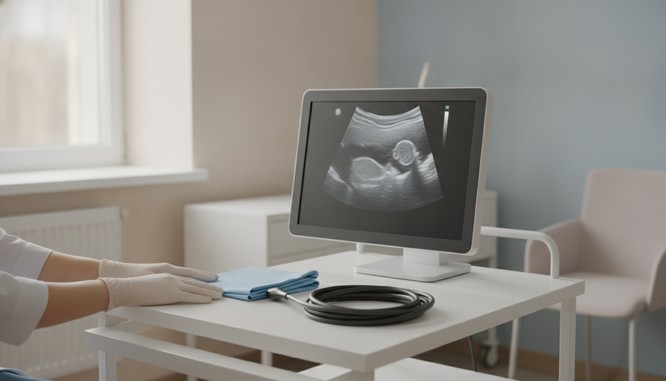
On what the ultrasound screen shows during a fat transfer:
“The ultrasound shows us exactly where the tip of the cannula is while we’re injecting fat into the buttock. Ideally, the cannula should be injecting fat into the deep fat layer above the muscle. We inject some fat in the superficial fat layer for shaping, but the bulk of the volume is injected in that deep compartment.”
“By visualizing exactly where we’re at, we’re avoiding intramuscular or deeper injections, which can cause fat embolism, a very severe complication. There have been no cases of fat embolus when fat has only been injected in the subcutaneous fat. The only cases of fat embolism have all had intramuscular fat injections.”
That distinction is the reason ultrasound is now standard here. Fat placed above the muscle has never produced a reported embolism. Fat placed into muscle, where the large gluteal veins run, has produced all of them.
On the protocol itself:
“We continued using blunt tips with cannulas larger than 4 millimeters. We avoided injections into the muscle. We used ultrasound to visualize the location of the tip of the cannula while injecting, making sure not to perform any intramuscular injections. I always use an upward-angled cannula, and the patient is positioned in a jackknife type position.”
On what any patient should ask, at any practice:
“The most important thing is whether the surgeon is using ultrasound or not. No matter the experience level of the surgeon, there’s always a risk that you can misjudge and be in the wrong plane, and this is completely avoidable with direct visualization.”
“That’s especially true of male patients, who have a very thin fat layer, and also massive weight loss patients, who have a very thin fat layer, so they’re at higher risk for intramuscular injections.”
On the certification work:
“I think the biggest achievement of WAGS while I was Vice President and President was educating patients and surgeons, both members and non-members, about safety. Also incorporating ultrasound into the BBL procedure, and creating a course and a certification for using ultrasound for Brazilian butt lifts. We also showed that the BBL can be performed safely. I was one of the first plastic surgeons to hold the WAGS certification for ultrasound-guided fat transfer to the buttock.”
Recovery Support at the Med Spa
A gluteal fat transfer is only partly a surgical result. How much of the grafted fat survives depends on circulation, swelling, and how carefully the early weeks are managed. Patients at Southwest Plastic Surgery are scheduled for post-surgical massage as part of recovery, which helps manage swelling and fibrosis in the donor areas treated with liposuction during the same operation.
Schedule a Consultation
Dr. Agullo is certified by the American Board of Plastic Surgery and the American Board of Surgery, completed his plastic surgery fellowship at the Mayo Clinic, and serves as Clinical Associate Professor of Plastic Surgery at Texas Tech University Health Sciences Center.
To discuss buttock augmentation at Southwest Plastic Surgery, call (915) 590-7900 or text 1-866-814-0038. #StayBeautiful
