En Español

« Back to Blog

NAD Plus, GHK-Cu, and the Peptide Wellness Program at Southwest Plastic Surgery
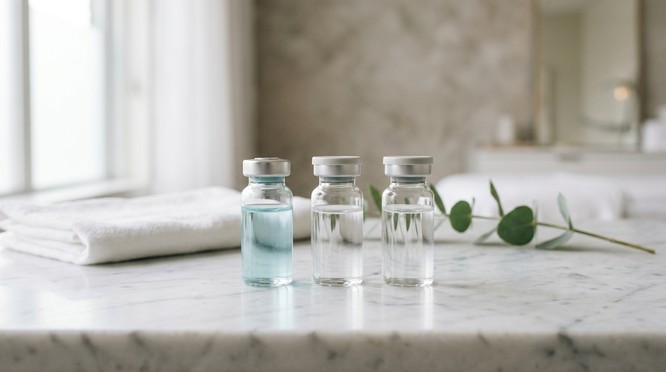
NAD plus and GHK-Cu copper peptide vials on a marble medspa counter, illustrating the peptide wellness program at Southwest Plastic Surgery, prescribed by Dr. Frank Agullo, MD, FACS, double board-certified plastic surgeon in El Paso, Texas

It was seven years after surgery, the last of many operations but the most important one at Southwest Plastic Surgery, and her deep plane facelift had held the way a properly executed deep plane face holds: subtly, perfectly, beautifully. She was not asking about another operation, another lift, another scar. She sat forward in her chair and asked, “Doctor, what do you think about NAD+? What about GHK-Cu? My friend has been on this thing called the GLOW blend. Is any of it real? Is it just marketing? What would you take yourself, assuming it all passed FDA approval?” Those kinds of questions were coming my way often, so we started building a program around them. This post is about what it is, who it is for, and its limits, written by a double board-certified plastic surgeon, not an influencer. This is the serious take. I have a separate piece that describes our approach for post-operative recovery, and you can find links to both companion pieces at the end.

What a Peptide Is

A peptide is merely a small string of amino acids, the building blocks of proteins. Our own bodies create hundreds of thousands of them daily to function and communicate between cells: insulin is a peptide, oxytocin is a peptide, growth hormone is a peptide. The therapeutic peptides we offer under a peptide wellness menu are synthetic copies of molecules your body already makes. They are synthesized under strict cGMP pharmaceutical conditions, measured and given in prescribed amounts to elicit a response. They are signaling molecules, telling your body to do things it already knows how to do: lay down collagen, repair DNA, build new micro-vessels, restore mitochondrial energy. Your own cells perform the work, the peptide is just the message. This has profound implications for understanding their limitations. Peptides are not substitutes for surgery when the need for surgery exists. No peptide will restore 20 pounds of lost facial volume or rebuild the worn ligaments supporting a youthful face, that is where surgery comes in. But they can prepare your cellular environment beforehand and help you recover afterward. For patients who do not need surgery yet, they extend the cellular runway, buying them time.

NAD Plus at Southwest Plastic Surgery

NAD+ (nicotinamide adenine dinucleotide) is not a peptide but a technically different coenzyme, though it finds its way onto many peptide wellness menus due to its well-established scientific rationale. The “nicotin” is derived from B3’s etymology and bears no relation to tobacco. I make that crystal clear for every patient. It fuels the mitochondria (the energy-producing cell organelles) and is the substrate for the sirtuins, enzymes implicated in DNA repair and gene regulation. NAD+ levels fall with age, and the decline correlates with a decrease in mitochondrial efficiency, the visual signs of aging, and the underlying cellular factors. Supplementing NAD+ in animal models reverses some of the signs and functional deficits of aging, and while the human data is younger, it trends that way too. At Southwest Plastic Surgery, we offer NAD+ as an IV infusion, the one most people are aware of and the source of those ecstatic online “I felt amazing afterward” stories. Run too quickly, it can be uncomfortable: chest tightness, flushing, a hot burning feeling, but that is rate-dependent, predictable, and totally preventable. Run over two to three hours, it is entirely painless and relaxing. We only run IV infusions slowly, and our medspa team is rigorously trained in titration for patient comfort. For maintenance purposes, I recommend one monthly IV infusion combined with subcutaneous NAD+ treatments in between. While the immediate post-IV energy boost is the most obvious reason patients book a second infusion, I am prescribing it for the less dramatic but more significant longer-term cellular work it performs over months.

GHK-Cu, the Skin Investment

GHK-Cu (copper tripeptide-1) occurs naturally in your plasma. Your levels peak in your twenties and steadily decline thereafter. It is the same active ingredient found in copper peptide serums and lotions on the dermatology counter, but with a critical difference. Topical GHK-Cu must pass through the stratum corneum, an efficient skin barrier that excludes large molecules like GHK-Cu. The injectable form, conversely, delivers the molecule directly to the dermis in a measured amount, with no battle against your skin barrier. The mechanisms of action read like the reverse of skin aging. It activates over three hundred genes that promote tissue repair, stimulates fibroblasts to produce collagen and elastin, supports basal stem cells in the epidermis, exhibits anti-inflammatory properties, and acts as an antioxidant. Preclinical and initial clinical research has demonstrated notable benefits on hair growth, skin density, and the visible effects of photoaging. None of this is a myth. What is misleading is that topical formulations generally deliver only a fraction of the dose used in these study protocols. As for lifestyle and wellness use, I typically recommend GHK-Cu for women in their early to mid-forties, women who are on top of external care (like excellent skincare and sunscreen), are not yet candidates for surgery, and want to get some real work happening in the underlying cellular layer of their regimen. I will typically start a patient on 1 to 2 mg subcutaneously daily in cycles of ten to twenty-one days, repeating periodically depending on their response. The bluish tint of the solution comes from the copper, and it is completely normal.

GLOW and Where the MedSpa Fits

GLOW is our three-peptide blend (GHK-Cu, BPC-157, and TB-500), formulated by a special compounding pharmacy. All three components play a vital role in surgical recovery, but I assess their lifestyle wellness use differently. For routine lifestyle and anti-aging wellness, I usually opt to prescribe GHK-Cu in cycles rather than the full GLOW blend. The skin and hair benefits patients often seek are primarily GHK-Cu’s contribution. While BPC-157 and TB-500 are renowned for their roles in tissue repair (which is their purpose), injecting them long-term for general wellness in healthy patients without an injury pushes the boundaries of evidence-based benefit. I prefer to reserve them for periods of actual recovery when the need is clear and the treatment duration is finite. The exception is a patient who suffers from chronic soft-tissue issues, persistent inflammation, or is in rehabilitation following a serious injury. In those cases, the full GLOW blend delivered in cycles can be a sensible approach.

Our Southwest Plastic Surgery MedSpa is equipped to administer IV NAD+ infusions, provide subcutaneous NAD+ refills, and dispense GHK-Cu to patients on a wellness plan after proper instruction. The MedSpa nurses provide training in self-injection technique, including advice on rotating injection sites to minimize bruising and irritation. They administer slow-rate, comfortable NAD+ infusions in our tranquil recliner-equipped infusion room, and they handle the scheduling and tracking of wellness cycles. The MedSpa does not adjust the dosage of any prescribed peptide without my approval, nor do they add other peptides to a regimen based solely on something a patient encountered online. Both of those decisions rest with me as the ordering physician. That is not a limitation of the service, that is the safety floor distinguishing a genuine medical program from a transient wellness trend. Beyond their specific benefits, we often integrate peptides into a broader spectrum of MedSpa treatments in synergistic ways. For instance, patients undergoing a GHK-Cu cycle might time it to coincide with their microneedling or laser treatments, taking advantage of the skin’s enhanced remodeling capacity following those procedures.

Who Is a Candidate, and What Peptides Do Not Replace

A good candidate for peptide wellness is usually between their late thirties and sixties, has no active cancer or infection, is in generally good health, and is committed to a multi-month treatment plan with regular follow-up appointments. Our consultations involve a thorough medical history, a review of all medications, frequently up-to-date lab results, and an open discussion about your cosmetic and wellness objectives and the projected timeline. Active malignancy is an absolute contraindication for any growth-factor-related peptides. Pregnancy and breastfeeding immediately place a patient off protocol. A personal history of cancer, even if treated and resolved, warrants an extended conversation and often clearance from an oncologist before proceeding. Patients on chronic anticoagulant medication will have their peptide doses adjusted accordingly.

Peptides are not a substitute for SPF protection. They cannot replace sleep. They cannot replace an adequate intake of protein, resistance training, healthy blood pressure, or any other pillar of standard preventive medicine. When stacked on top of those fundamentals, a peptide protocol can be meaningful. If it replaces them, it is merely an expensive way to deplete your wallet. Nor do peptides obviate the need for surgery when the patient’s facial anatomy calls for it. A patient who has lost the youthful support of their cheeks and jawline will not regain that structure through any peptide on offer. The correct answer for that individual is a deep plane facelift, with peptides serving as a support system for recovery and long-term aging maintenance, not as a replacement for the foundational surgery itself.

The Cautious Side

Peptides are not on an FDA new drug approval pathway. Instead, they are typically compounded for physician prescription at 503A pharmacies within the United States. While perfectly legal, this regulatory space is precisely why the gray market is saturated with vials of uncertain origin, potency, and sterility. The pharmacy I partner with is US-based, cGMP-certified, and provides a certificate of analysis with every batch. The price tag will be higher than buying off a vendor on Instagram. The discrepancy in cost highlights the distinction. To directly answer the question of buying peptides on social media: unequivocally, no. Without exception. A compounded peptide blend is carefully balanced. Throwing additional peptides onto the mixture after seeing something on a podcast is not optimizing your regimen, it is a potential way to inflict an unanticipated hormonal or hematological issue on yourself. If you are interested in adding to your peptide protocol, that discussion must take place in my office, with new prescriptions issued for those additional molecules.

For an edited, shorter version of this article, see The Quiet Way I Treat Aging: NAD Plus, GHK-Cu, and the Peptides I Stand Behind on drworldwide.com. For the more comprehensive and in-depth clinical discussion of mechanisms, dosing, and contraindications, see Peptides for Anti-Aging and Wellness: A Plastic Surgeon’s Clinical Read on NAD Plus and GHK-Cu on agulloplasticsurgery.com.

Why Choose Dr. Agullo

Double board-certified in plastic surgery (American Board of Plastic Surgery) and surgery (American Board of Surgery). Fellow of the American College of Surgeons. Completed a plastic surgery fellowship at the Mayo Clinic. Clinical Associate Professor of Plastic Surgery at Texas Tech University Health Sciences Center, where I train the next generation of surgeons in the techniques I use daily. Affiliate Professor at UTEP. Named a Castle Connolly Top Doctor for thirteen consecutive years. Every peptide I prescribe is sourced exclusively through a US-based cGMP-certified compounding pharmacy, precisely dosed by me, and fine-tuned during your follow-up appointments.

Ready to Talk?

If you are interested in whether a peptide protocol aligns with your individual goals, the first step is a personalized wellness consultation at Southwest Plastic Surgery. We will review your entire medical history, discuss your aesthetic aspirations, assess your current routine, and explore what you envision for the coming decade. If peptides are a suitable fit, we will create a tailored protocol. If they are not, I will honestly tell you so. Call us at (915) 590-7900, text 1-866-814-0038, or book an appointment online at agulloplasticsurgery.com. Connect with us on social: @RealDrWorldWide on Instagram, TikTok, and Snapchat, @Agullo on X, or @AgulloPlasticSurgery on Facebook. #StayBeautiful.
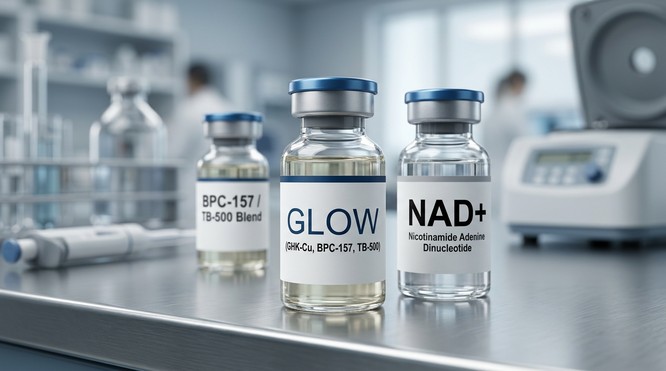
Peptides for Surgical Recovery at Southwest Plastic Surgery: GLOW for Face, KLOW for Body, NAD Plus

GLOW peptide blend (GHK-Cu, BPC-157, TB-500) and NAD plus vials prepared on a sterile clinical surface, illustrating the post-operative peptide recovery protocol prescribed by Dr. Frank Agullo, MD, FACS, double board-certified plastic surgeon at Southwest Plastic Surgery in El Paso, Texas.

Three weeks after surgery, a deep plane facelift patient sat down across from me at her two week visit. She lifted the hand mirror she had brought, looked at her own face, and asked the question I get more often than any other in that chair. “Why do I feel this good already?” The bruising she had braced for never really showed up. The fatigue lasted four days. She had slept the night of surgery and every night since.

I told her the truth. Part of it is the operation itself. A well-executed deep plane facelift releases the four retaining ligaments and repositions the soft tissue without tension, which means less swelling and less bruising than a traditional skin-tightening lift. Part of it is anesthesia and a meticulous closure. And part of it, increasingly, is what I add on the back end. A short, supervised peptide protocol that I have been refining for several years and that we now offer almost every surgical patient at Southwest Plastic Surgery.

More and often than not, when patients request I write peptide protocols, this is why. The recovery benefit is only one application for these molecules. Many patients use these molecules as part of an enhanced fitness and wellness program, for instance, they’ll use these peptides exclusively for support on their skin health, boost their immune and energy systems and ward off aging, which have nothing to do with post-surgery support. This specific article addresses only surgical recovery. If you wish to read my article concerning these peptides as a standalone benefit within a wellness program, please refer to the hyperlink found at the end of the document.

What a peptide actually is

A peptide is a short string of amino acids. The body makes thousands of them every day to send signals between tissues. Insulin is a peptide. Oxytocin is a peptide. Growth hormone is a peptide. The peptides I prescribe for surgical recovery are synthetic versions of molecules the body already makes, manufactured under cGMP pharmaceutical conditions, dosed precisely.

That is the part that matters. These are not herbal supplements. They are not hormones in the testosterone or estrogen sense. They are signaling molecules. The dose tells the body to do something it already knows how to do, just faster and more completely. Lay down collagen. Recruit fibroblasts to a sutured edge. Build new microvasculature. Restore mitochondrial energy.

Used well, with a physician selecting the dose and the duration, peptides accelerate the work the body was going to do anyway. Used poorly, with patients shopping the gray market on Instagram, they are a waste of money or a real safety problem. The peptides we prescribe at Southwest Plastic Surgery come from a US-based, cGMP-certified pharmacy with a certificate of analysis on every batch.

GLOW for face, KLOW for body

I prescribe two related peptide blends, depending on the operation. GLOW is a three-peptide blend (GHK-Cu, BPC-157, TB-500). KLOW is the same three peptides plus a fourth, KPV. The reason the menu has two versions is that face and body procedures call for different emphasis on the recovery side, and the right blend tracks the operation. The pharmacy compounds the peptides together in one vial, which makes it a single daily injection rather than three or four.

GHK-Cu is a naturally occurring copper tripeptide found in human plasma. The concentration drops as we age. It’s the same active compound in the copper peptide cosmetics you see at Sephora, with one important difference: injected, the peptide reaches the dermis directly at a controlled dose, instead of having to fight through the stratum corneum. Mechanistically, GHK-Cu activates more than three hundred genes involved in tissue repair. It signals fibroblasts to lay down new collagen and elastin. For a facelift patient, it is the part of the blend that helps a fresh incision heal flat and helps the skin in the operated zone look better six months out. The blue color of the solution comes from the copper. It is normal.

BPC-157 stands for Body Protection Compound. It is a fifteen amino acid peptide derived from a protein in human gastric juice. The mechanism that matters most for recovery is angiogenesis, the formation of new blood vessels at injury sites. New tissue cannot survive without blood supply. The body builds that supply slowly. BPC-157 accelerates it. The peptide also dampens local inflammation and supports tendon, ligament, and muscle repair. For a body procedure, this is the workhorse of the blend.

TB-500 is a synthetic analog of Thymosin Beta 4. It regulates a cellular protein called actin, which is essentially the rail system cells use to crawl across tissue. The simple way to put it: BPC-157 builds the new blood vessels, and TB-500 mobilizes the repair cells to use them. The two are synergistic, and the original published research on the pair came out of sports medicine, where elite athletes used the combination to come back from soft tissue injuries faster.

KPV’s a tripeptide (lysine-proline-valine) derived from alpha-MSH, and the job it does is anti-inflammatory. It works by inhibiting NF-kB, which is the master switch in the body for inflammatory gene expression. BPC-157 and TB-500 already dampen inflammation as a side effect of their main jobs, but KPV is the dedicated anti-inflammatory anchor sitting on top of that. For face procedures, where the inflammatory load is small and the priority is incision quality and skin remodeling, GHK-Cu’s doing most of the heavy lifting and GLOW gets the job done. For body procedures (BBL, gluteal fat grafting, tummy tuck, mommy makeover, breast surgery), the inflammatory field is much bigger, so I add KPV. That’s KLOW. Same once-daily injection from the same compounding pharmacy. The surgical field just gets broader anti-inflammatory coverage where it needs it.

I dose both blends subcutaneously, abdomen or thigh, once daily for the first three to four weeks after surgery. Most patients self-inject at home with a 30 gauge insulin syringe. We adjust at each post-op visit.

NAD plus, the mitochondrial side

NAD+ is a different molecule for a different problem. Technically it is a coenzyme rather than a peptide, but it sits next to peptides on the same prescribing menu and pairs with them well. The “nicotin” in Nicotinamide Adenine Dinucleotide is from vitamin B3 etymology. It has nothing to do with cigarettes, a clarification I make at the start of every consultation.

NAD+ powers the mitochondria, the cellular machinery that makes energy. It also fuels sirtuins, a family of enzymes involved in DNA repair. Levels drop with age, with stress, and with illness. Surgery is a stress. Recovery is a period of accelerated cellular work. Adequate NAD+ is the cofactor that work needs.

We primarily use at-home self-injections. Patients can go home with one month total supply. You’re supposed to split the doses evenly between morning and night in two separate injections a week apart. I usually inject patients two times per week for a total of eight doses. A total of 62.5 mg each time to recover nicely over the four weeks post surgery. Patients typically have minimal discomfort and it’s convenient for at-home self use. The constant infusion will ensure constant mitochondrial support throughout this crucial period in your healing.

If you do decide that you want to add an IV option in addition to the self injections, Southwest Plastic Surgery does offer a NAD+ and Glutathione drip. One IV infusion a few days before surgery and another one about a week after the surgery. One before surgery primes the body’s mitochondria so that we can have as much support as possible for the body going through stress from the surgical trauma. One after surgery helps the body as we head into the critical phase in the healing and repairing processes of the body’s cells. Glutathione is added slowly over time as the IV infusion slows. Glutathione is an antioxidant peptide which is useful in liver Phase 2 cleansing and it also helps clear leftover anesthesia and metabolites that come from the surgery.

One IV complication to note: Run the NAD+ infusions too quickly, the NAD+ will cause chest tightening, nausea, flush and a hot burning sensation. The reaction to IV NAD+ is dose and speed related. Run the NAD+ drip at the recommended rate, the NAD+ (500 mg) will usually be administered at over two to three hours followed by 1000-1500 mg of Glutathione at a push rate of five to 15 min, the entire time the infusion is happening is comfortable for the patient. Our medspa nurses are excellent in titrating rate to patient comfort. Asthma patients should be watched carefully during the glutathione push as we’ve had a patient or two experience bronchospasm.

How the protocol matches the procedure

The recovery protocol is not a single template. It shifts with the operation.

Procedure Blend Cycle NAD plus
Facelift, neck lift, blepharoplasty GLOW 3 to 4 weeks daily 250-500 mg SQ/IM monthly, divided 2x/week. Optional IV pre-op + post-op.
BBL, gluteal fat grafting, body contouring, tummy tuck, mommy makeover KLOW 4 to 6 weeks daily Same SQ/IM schedule, sometimes extended through month two. Optional IV pre-op + post-op.
Breast surgery, including Motiva Preserve augmentation KLOW 3 to 4 weeks daily 250-500 mg SQ/IM monthly, divided 2x/week. Optional IV pre-op + post-op.
Combination procedures (face plus body, multi-site) KLOW Longer cycle, individualized Standard SQ/IM schedule, IV often included.
Isolated minor procedures (lip lift alone, blepharoplasty alone) Often none Patient-specific Patient-specific

Where the MedSpa fits, and where it does not

The Southwest Plastic Surgery MedSpa runs the IV NAD+ plus glutathione infusions, the subcutaneous NAD+ refills, and the peptide pickup and education for patients on a GLOW or KLOW protocol. The MedSpa nurses also handle the technique training for self-injection at the post-op visit, including site rotation and disposal.

Two things the MedSpa does not do, and that I want to be plain about. The MedSpa does not adjust the prescribed dose without me. The MedSpa does not add additional peptides on top of GLOW or KLOW based on something a patient read online. Both of those decisions live with me as the prescribing physician. That is not a service limitation. That is a safety floor.

We integrate the peptide protocol with the rest of what the MedSpa offers in the same recovery window. Lymphatic massage, ElixirMD post-op recovery, scar protocols. The peptide piece is not a replacement for any of those. It is an addition.

Who is a candidate, and who is not

The starting question is whether the patient wants the smoothest possible recovery, will tolerate four to six weeks of daily self-injection, and has a medical history that supports the protocol. Most do.

Active malignancy is a contraindication for growth-factor-adjacent peptides because we do not want to support an undiagnosed tumor. Pregnancy and breastfeeding are off the protocol. Active infection is a temporary contraindication and we delay until cleared. Patients on therapeutic anticoagulation receive adjusted dosing in coordination with their cardiologist. Patients with a personal cancer history, even if treated and clear, get a longer conversation and often an oncology clearance before we proceed.

The cautious side

Peptides aren’t actually FDA-approved new drugs, as most physicians use compounded peptides from US 503A pharmacies. This practice is legal and valid, however, it also contributes to a black market rife with peptides of unspecified origin, unverified dosage and questionable sterility. As a peptide is an injectable sterile medication, purchasing it from a source on Telegram represents a risky decision about one’s well-being and is a lawsuit waiting to happen. I personally use a U. S. -based, cGMP-certified pharmacy, which provides a certificate of analysis with each prescription. The price is higher than that of the black market. You’re paying for the quality differential that this represents.

The second rule, and the one patients sometimes struggle with: a compounded peptide blend is calibrated. Adding random fourth and fifth peptides on top of GLOW or KLOW because of a podcast is not optimization. It is a way to give yourself an unintended hormonal or hematologic problem. If a patient wants to expand the protocol, that conversation happens in my office, with new prescriptions written for the new molecules.

Two more reads

For the editorial, shorter version of this post, with the Vogue-side voice rather than the practice-side voice, see After the Operating Room: The Peptide Stack My Patients Recover On on drworldwide.com.

For the longer, more clinical version, with deeper mechanism, dosing, and contraindications, see Peptides for Plastic Surgery Recovery: A Clinical Guide to GLOW and NAD Plus on agulloplasticsurgery.com.

Why choose Dr. Agullo for a peptide-supported recovery?

Double board-certified, American Board of Plastic Surgery and American Board of Surgery. Fellow of the American College of Surgeons. Mayo Clinic plastic surgery fellowship. Clinical Associate Professor of Plastic Surgery at Texas Tech University Health Sciences Center, teaching the same techniques I use every week. Affiliate Professor at UTEP. Castle Connolly Top Doctor for thirteen consecutive years. The peptide protocol is prescribed by me, sourced through a US cGMP-certified compounding pharmacy, and integrated into a recovery plan refined operating on local, national, and international patients for the last fifteen years.

Ready to talk?

The right time to start the recovery conversation is during the surgical consultation, not the day before surgery. Schedule a consultation at Southwest Plastic Surgery and we will review your anatomy, the operation you are considering, your medical history, and we will decide together whether peptides belong in your plan. If they do not fit, I will say so. If they do, you will leave the consultation with a written protocol, a price, and a timeline. Call (915) 590-7900, text 1-866-814-0038, or book online at agulloplasticsurgery.com. Follow along on social at @RealDrWorldWide on Instagram, TikTok, and Snapchat, @Agullo on X, or @AgulloPlasticSurgery on Facebook. #StayBeautiful.

Location Marker
Southwest Plastic Surgery
1387 George Dieter
Dr. Bldg C301
El Paso, TX 79936
Tel: (915) 590 7900
Fax: (915) 590 7902
Get Directions
The MedSpa Southwest Plastic Surgery West
5925 Silver Springs Dr.
Suite C
El Paso, TX 79912
Tel: (915)590-7907
Get Directions