En Español

« Back to Blog

Recovery and Aftercare at Southwest Plastic Surgery: Half the Result Happens After Surgery
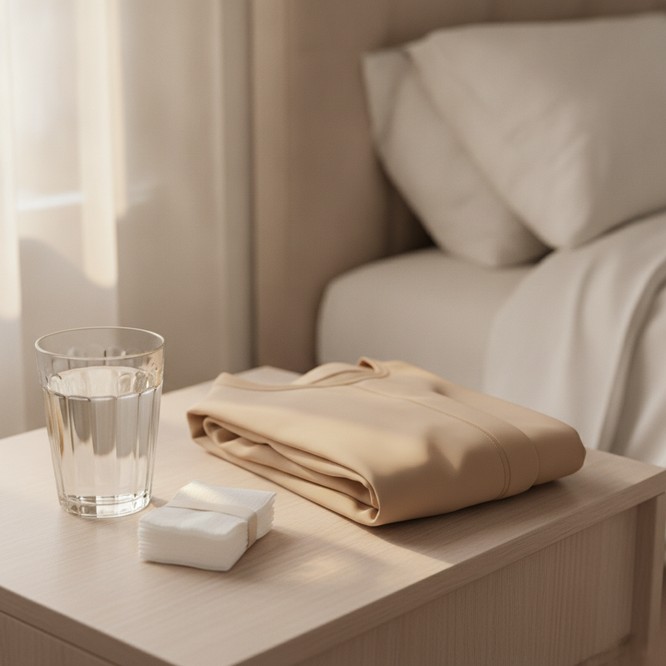
Recovery essentials in soft daylight at Southwest Plastic Surgery, El Paso, a compression garment and water. Aftercare guidance with Dr. Frank Agullo.

At Southwest Plastic Surgery, Dr. Frank Agullo tells patients something they do not always expect to hear: a good result is half operation and half aftercare. The patients who do their massages, wear their garments, and call early when something feels off are the ones who heal beautifully. That is why the practice builds recovery support into every plan rather than leaving patients to figure it out alone.

These are the recovery questions the team answers most, drawn from real follow-up visits.

Is This Firmness Normal?

Usually, yes. After surgery, firm or hard areas are fibrosis and edema, a normal part of healing. Dr. Agullo has patients massage these areas, and the firmness keeps softening over about three months. It is far better at three months than at three weeks. What is not routine is new, painful, red, or rapidly changing firmness, which is a reason to call the practice.

A Stitch Is Poking Out

That is usually a suture working its way to the surface, which is common and minor. If a small area opens where a suture extruded, the team keeps it covered, sometimes with a silver antimicrobial dressing, and it heals. It does not mean something went wrong. Rarely an incision needs a few extra sutures, about one patient in fifty.

How the Massages Work

Aftercare Step What the Practice Provides
Lymphatic massage In-house tech, 2 to 3 times a week for ~4 weeks
Abdominal drain Clears trapped fluid during massage
Compression Two Marena fajas, sized down as swelling drops
Facial recovery ElixirMD LED therapy from day seven

For body work, the lymphatic massages are how the practice keeps fibrosis from becoming a problem. An in-house tech sees patients two or three times a week for about four weeks. In the abdomen, Dr. Agullo leaves a small drain so trapped fluid clears quickly during massage, because trapped fluid is what creates lumpiness.

Garments and Showering

The practice provides two Marena fajas with clips so the team can size patients down as swelling drops. They are worn four weeks, off twice a day to shower and let the skin breathe. If a standard post-op bra is uncomfortable, a supportive alternative is often fine, because comfort that keeps a patient in compression beats a “correct” garment they refuse to wear. Patients shower the next day, and a nurse visits to help with that first shower, check healing, give IV fluids if needed, and answer questions.

Nausea, Pain, and Who Is in the Room

If a patient tends to get nauseous from anesthesia, a pill called Emend taken the night before usually prevents it. Facial procedures barely hurt. Liposuction feels like going back to the gym after a long break, sore with movement but tolerable, and easier than a C-section.

The anesthesia is run by CRNAs who are army and combat trained and have been with Dr. Agullo over ten years. The surgical techs are certified first assist and have been with the practice since 2012. After surgery, patients get a wristband with a 24-hour line to the nurses or nurse practitioner.

What Speeds Healing

Several recovery supports are available through the practice and its Med Spa. NAD infusions with glutathione before and after surgery help clear the anesthesia. Post-op peptides, GLOW for face work and GLOK for body, help with inflammation and tissue regeneration. Arnica and bromelain help with bruising. And for facial recovery, ElixirMD LED therapy starting seven days out roughly doubles the speed of healing.

The Three Habits Behind a Smooth Recovery

Dr. Agullo sums up the patient’s role in three habits: do the massages, wear the garment, and call early. The patients who keep up with their post-surgical massage are the ones whose tissue stays soft and even, while skipping it is what leads to fibrosis that has to be broken up months later.

The garment is the mold the new contour sets into, not a fashion choice, which is why the practice provides two and sizes them down as swelling drops. And calling early matters because nearly everything that worries a patient in the first weeks is normal, and the rare exception is easiest to address when caught quickly.

Preparing Before Surgery Day

The smoothest recoveries start before surgery. The team coaches patients to set up at home in advance: loose clothing that does not require raising the arms overhead, water and easy meals stocked, elevation arranged if the procedure calls for it, and help lined up for the first few days. Arranging support ahead of time is far easier than scrambling for it afterward, and it lets the patient focus on healing.

When Can a Patient Travel or Return to Work?

This is a per-patient answer rather than a fixed timeline. Dr. Agullo prefers to clear patients based on how they are actually healing, not a generic chart. Patients are encouraged to mention upcoming trips early so the team can plan around them, including precautions for long flights. After surgery, every patient receives a wristband with a 24-hour line to the nurses or nurse practitioner, so questions never have to wait.

About Dr. Frank Agullo

Dr. Frank Agullo is the founder of Southwest Plastic Surgery in El Paso, Texas. He is double board-certified by the American Board of Plastic Surgery and the American Board of Surgery, a Fellow of the American College of Surgeons, and completed his plastic surgery fellowship at the Mayo Clinic. He is a Clinical Associate Professor of Plastic Surgery at Texas Tech University Health Sciences Center Paul L. Foster School of Medicine and has been named a Castle Connolly Top Doctor for thirteen consecutive years.

Ready to Talk?

Recovery questions deserve real answers from the surgeon, not the internet. For the surgeon’s editorial take, see Dr. Agullo’s essay on drworldwide.com. For the patient-facing walkthrough, see the companion post on agulloplasticsurgery.com.

Call (915) 590-7900, text 1-866-814-0038, or book online at swplasticsurgery.com. #StayBeautiful.

@RealDrWorldWide on Instagram, TikTok, and Snapchat, @Agullo on X, or @AgulloPlasticSurgery on Facebook.
The BBL Recovery Program at Southwest Plastic Surgery: The Four-Part Hygiene Protocol, the Compression Plan, the Lymphatic Drainage Cadence

The BBL Recovery Program at Southwest Plastic Surgery: The Four-Part Hygiene Protocol, the Compression Plan, the Lymphatic Drainage Cadence. Dr. Frank Agullo, MD, FACS, double board-certified plastic surgeon at Southwest Plastic Surgery in El Paso, Texas.

At the long table in the front office at Southwest Plastic Surgery, the post-op visit after a Brazilian Butt Lift covers two things in equal weight. The shape and contour of the new gluteal region. And the hygiene plan that gets the patient through the first six weeks without the smell, the surface skin breakdown, and the avoidable low-grade infections that nobody wants to discuss out loud.

Australia’s GP-trade journal, Medical Republic, reprinted Dr. Frank Agullo’s four-bullet BBL hygiene protocol last month under the title “Jingle bells, your butt smells,” crediting Dr. Agullo as a board-certified plastic surgeon and a founding vice-president of the World Association of Gluteal Surgeons. The protocol is part of the broader BBL recovery program at Southwest Plastic Surgery, and the longer version of how the program runs in practice belongs here.

Why BBL Recovery Is a Hygiene Project, Not Just a Surgical One

A BBL is two operations done together. A liposuction harvest from the donor compartments. And a structured gluteal injection in which the harvested and processed fat is placed in the subcutaneous gluteal compartment using anatomic, low-pressure cannula technique that respects the safe planes.

For the first six weeks, the body is moving fluid out of the operated tissue while simultaneously laying down the new microvasculature that keeps the transferred fat alive. The compression garment is on most of the day. The patient is sleeping prone or side-lying. Sitting is restricted. Sweating is increased because the garment is occlusive. The perineum and intergluteal cleft spend most of the day in a humid, occluded environment.

The four-part hygiene protocol exists because that environment, in the absence of disciplined hygiene, produces three predictable problems: surface odor, surface skin breakdown, and in the worst case a low-grade bacterial colonization of an incision that should have closed cleanly. The protocol removes the substrate for all three.

The Four-Part Hygiene Protocol

Hibiclens as a Body Wash, Days One Through Twenty-One

Hibiclens is a chlorhexidine gluconate antibacterial wash widely used in pre-operative skin preparation. It is available over the counter. Southwest Plastic Surgery sends BBL patients home with the instruction to use Hibiclens as a body wash from day one through day twenty-one, with normal soap on the face and the hair.

The reasoning is the residual antibacterial effect chlorhexidine leaves on the skin after rinsing. The protection carries past the shower into the hours when the patient is back in the compression garment. The perineum and intergluteal cleft are the highest-risk zones in the first two weeks, and a daily Hibiclens wash measurably reduces the bacterial load on the skin.

Clinical points: avoid above the neck, keep out of the eyes and ears, do not use on irritated or rashy skin, and in the small subset with a chlorhexidine sensitivity the office substitutes a different antibacterial wash.

A Bidet for the Perineum and the Intergluteal Cleft

Toilet paper after a BBL is abrasive, leaves residue, and tends to drag through tissue that has been freshly operated on. A bidet, a sprayer attachment, or a peri-bottle of the kind used after childbirth solves all of those problems at once. Rinse without abrading. Dry gently with a soft towel. The compression garment goes back on over genuinely clean tissue.

The patient handout at Southwest Plastic Surgery lists three acceptable hardware options at three price points, because the principle matters more than the equipment. Rinse, do not abrade.

Two Compression Garments in Rotation, Washed Daily

The compression garment is on most of the day for the first six weeks. By the end of a single day of wear in a hot El Paso summer, the inside of the garment is a humid, bacterial-friendly environment that the patient is then about to sleep in.

The protocol is to own two garments and rotate them. Wear one, wash one, swap every twenty-four hours. Gentle detergent. Cold to warm wash. No fabric softener. Flat air dry. Dryer heat tends to break down medical-grade fabric over time.

This single change has a larger effect on odor and on incision-site comfort than any other piece of the protocol. The patient handout lays out the schedule explicitly, because patients who try to run a single garment for six weeks discover that the inside of the garment is doing exactly the work the protocol is designed to prevent.

In-House Post-Operative Lymphatic Drainage Massage

Post-surgical massage at Southwest Plastic Surgery is performed by an experienced therapist trained in post-operative lymphatic drainage. The technique uses gentle directed strokes along the body’s natural drainage pathways to mobilize fluid out of the donor sites and around the grafted fat.

The recognized benefits are well-established: less swelling, faster bruise resolution, less fibrosis in the donor sites, better contour at six weeks. The hygiene-adjacent benefit is that a well-drained donor site is a less hospitable environment for low-grade skin colonization than a poorly drained one.

The treatment cadence at the practice is typically two to three sessions a week for the first two weeks, weekly through week six, and tapering through week twelve. The schedule is individualized to the patient.

What the Program Looks Like at a Glance

Pillar Component Cadence Setting
Hygiene Hibiclens body wash Daily, days 1 to 21 At home
Hygiene Bidet for perineum and cleft Every bathroom use At home
Garment Two-garment rotation, daily wash Six weeks At home
Lymphatic drainage Trained therapist, structured cadence Weeks 1 through 12 Southwest Plastic Surgery
Recovery support ElixirMD IV vitamin and peptide protocols As indicated Southwest Plastic Surgery
Skin quality MedSpa treatments for any donor-site skin issues Weeks 6+ Southwest Plastic Surgery
Follow-up cadence Week 1, week 2, week 6, three months, six months, one year Structured Southwest Plastic Surgery

The columns are designed to run together. The patient owns the at-home column. The practice owns the at-office column. The recovery is best when both run on the same calendar.

Why the Hygiene Protocol Belongs in a Practice Program, Not Just a Blog Post

A BBL hygiene protocol on a blog post is useful. A BBL hygiene protocol inside a practice program is materially more useful, because the practice can do four things the blog post cannot do. Confirm that the patient understands each step at the post-op visit. Order the compression garments in the correct size and quality. Schedule the lymphatic drainage on the right cadence with a therapist who works with BBL patients every week. And surface any of the warning signs (fever above 100.4 F, focal redness, increasing pain, foul-smelling discharge, frank wound dehiscence) at the first sign rather than at the third visit.

The result is a recovery that the patient experiences as predictable and the surgeon experiences as controlled.

About Dr. Frank Agullo

Dr. Frank Agullo is the founder of Southwest Plastic Surgery in El Paso, Texas. He is double board-certified by the American Board of Plastic Surgery and the American Board of Surgery. He is a Fellow of the American College of Surgeons. He completed a plastic surgery fellowship at the Mayo Clinic. He is a Clinical Associate Professor of Plastic Surgery at Texas Tech University Health Sciences Center Paul L. Foster School of Medicine and an Affiliate Professor at the University of Texas at El Paso. He has been named a Castle Connolly Top Doctor for thirteen consecutive years. He is a founding vice-president of the World Association of Gluteal Surgeons, and national and international outlets routinely call on him for BBL commentary, including the recent feature in Medical Republic Australia that reprinted the four-bullet hygiene protocol.

Ready to Talk About a BBL?

If a Brazilian Butt Lift is on your mind, the first step is a consultation at Southwest Plastic Surgery. The operation and the recovery program are planned together. The hygiene protocol is part of the plan from the beginning.

For the surgeon’s editorial version, see Dr. Agullo’s drworldwide.com essay, Jingle Bells, Your Butt Smells: A Surgeon’s Protocol. For the clinical patient-facing version, see What Nobody Tells You About BBL Recovery on agulloplasticsurgery.com.

Call (915) 590-7900, text 1-866-814-0038, or book online at swplasticsurgery.com. #StayBeautiful.

@RealDrWorldWide on Instagram, TikTok, and Snapchat, @Agullo on X, or @AgulloPlasticSurgery on Facebook.

Location Marker
Southwest Plastic Surgery
1387 George Dieter
Dr. Bldg C301
El Paso, TX 79936
Tel: (915) 590 7900
Fax: (915) 590 7902
Get Directions
The MedSpa Southwest Plastic Surgery West
5925 Silver Springs Dr.
Suite C
El Paso, TX 79912
Tel: (915)590-7907
Get Directions