

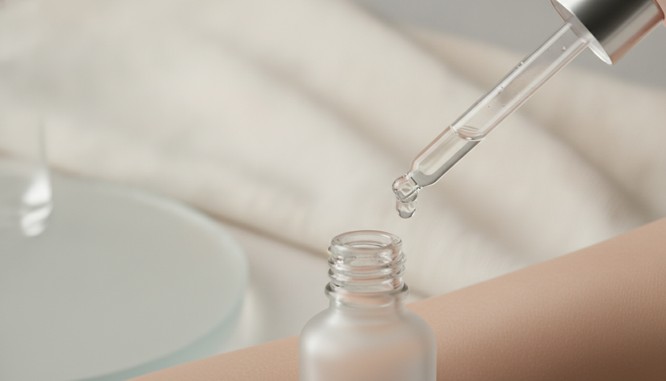
WOWMD recently asked Dr. Frank Agullo to weigh in on the best hyaluronic acid serums for a national roundup, alongside a colleague in Sydney, Australia. Patients ask the practice’s Med Spa and Laser team the same question regularly, so here’s the breakdown Dr. Agullo gave.
What a Hyaluronic Acid Serum Actually Does
At its core, a topical HA serum is water and hyaluronic acid. It pulls moisture to the top layer of skin and holds it there, which plumps skin and softens the look of fine lines within about an hour of application. “It’s a humectant, not a filler,” Dr. Agullo says. “It doesn’t rebuild collagen and it doesn’t reach the deeper layers of skin the way an injectable does.”
Why Molecular Weight Is the Detail Most People Miss
Hyaluronic acid comes in different molecular weights, and the weight determines where it goes to work. High molecular weight HA stays on the surface, forming a film that slows water evaporation through the day. Low molecular weight HA is a smaller molecule that penetrates into the epidermis, where it can do more for texture and fine lines.
“A serum with only one or the other gives you half the benefit,” Dr. Agullo says. “Look for a blend of both, high and low molecular weight HA together, because that gives you the surface film and the deeper hydration at the same time.”
What to Look for on the Label
| Ingredient | What it adds |
|---|---|
| High molecular weight HA | Surface hydration, slows water evaporation |
| Low molecular weight HA | Penetrates the epidermis, helps texture and fine lines |
| Niacinamide | Barrier protection |
| Ceramides | Moisture barrier repair |
| Peptides | Collagen support over time |
| Glycerin | A second humectant alongside HA |
Who Benefits Most
Dehydrated skin is the clearest case, along with patients recovering from a procedure or using a retinoid, since both can leave skin more prone to water loss. Arid climates, which describes El Paso for most of the year, is another. Perimenopausal and postmenopausal patients tend to see the most consistent benefit, since declining estrogen affects the skin’s own moisture retention independent of anything applied topically.
Who Should Check First
Patients with sensitive or broken skin, an active rosacea flare, a known sensitivity to a preservative like methylparaben, or a recent aggressive peel or laser session should check with the practice before adding a new serum. HA itself carries very low risk, but the rest of a formula doesn’t always.
The Practice’s Approach
Southwest Plastic Surgery’s Med Spa and Laser team builds skincare recommendations around the same structural logic Dr. Agullo applies to surgical consultations: identify what the skin actually needs before recommending a product. Dr. Agullo, who completed his plastic surgery fellowship at Mayo Clinic and serves as Clinical Associate Professor of Plastic Surgery at Texas Tech University Health Sciences Center, has been named a Castle Connolly Top Doctor for thirteen consecutive years.
Ready to Talk?
Our team can walk you through what your skin actually needs, serum or otherwise.
Call (915) 590-7900, text 1-866-814-0038, or book online at agulloplasticsurgery.com/appointments. #StayBeautiful.
@RealDrWorldWide on Instagram, TikTok, and Snapchat, @Agullo on X, or @AgulloPlasticSurgery on Facebook.
Cross-links
- Editorial version on drworldwide.com: “What Hyaluronic Acid Serum Actually Does (And Why Molecular Weight Matters)” (link once live)
- Patient-facing version on agulloplasticsurgery.com: “Choosing a Hyaluronic Acid Serum: What Your Skin Actually Needs” (link once live)
