

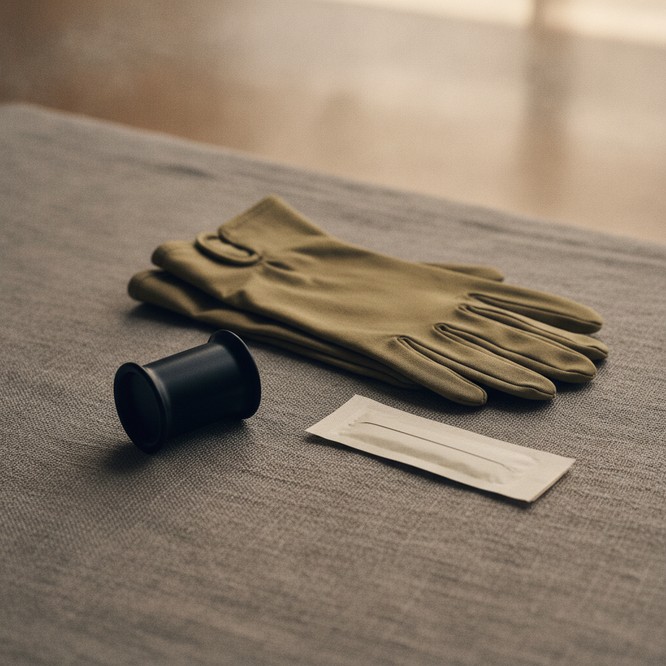
In a border city, the road to a federal uniform runs through a physical exam, and gauged ears do not pass it.
That is how many patients find Southwest Plastic Surgery. “Most of the people who show up for an ear gauge reversal or earlobe repair do so because they’re joining the workforce,” says Dr. Frank Agullo, the practice’s founder. “Jobs like the military, police, and border patrol require the earlobes to not be gauged. This is usually due to the risk of the earlobes getting caught or torn.”
Others are stepping into professional roles and, in his words, “have decided to clean up their look, so they appear more appropriate for their job position.” And occasionally the deadline is a wedding rather than a badge.
Not a Closure. A Reconstruction.
The most common misconception walks in the door with almost every patient: that the surgeon simply sews the hole shut.
“We really don’t close your gauges,” Dr. Agullo explains. “What we do is reconstruct the earlobe with the skin and fatty tissue that’s left after stretching out the gauge. Essentially, any size gauge can be reconstructed, even if it has been torn.”
Each case gets its own plan. “The repair itself is planned for each individual surgical case, depending on how much tissue there is left, how much skin, and also the quality of the skin and tissues. There’s not one standard technique.”
That also separates gauge work from a simple earlobe repair for a torn piercing. “This is different than an earlobe tear repair, which is usually just trimming the edges and bringing the tissues together. In this case, we usually discard some of the tissue, and we actually have to reshape the skin into an earlobe.”
Thirty Minutes, Local Anesthesia, Fast Timeline
The reconstruction is performed in the office under local anesthesia and usually takes about thirty minutes. External sutures come out in seven to ten days, and exercise resumes at about two weeks.
For applicants with a deadline, the key number is this one: “They can join the forces as early as seven to ten days after we remove the sutures.” Recruits with a scheduled physical regularly plan their surgery date at Southwest Plastic Surgery by working backward from it.
By three months, according to Dr. Agullo, “it would be difficult for anybody to tell that the patient had a gauged ear before. It heals very well, and the scars are very difficult to identify or see.” For patients who want the skin polished further, laser treatments are available through the med spa.
Earrings Again, If You Want Them
Reconstruction does not mean the end of earrings. “Yes, you can re-pierce your ears after a gauge repair. We usually wait at least four to six weeks to re-pierce the ear. We can do that in the office. We just need an earring stud that we can keep in place for at least a month. We sterilize it before placing it, so that the new piercing heals.”
Cost
Gauge reconstruction at Southwest Plastic Surgery is cash based with one upfront quote. “The cost range usually starts at fifteen hundred dollars, and it depends on how much the ear has been gauged, how much tissue is left, and the complexity of the reconstruction.” Most cases can be quoted from a photo sent by email or text.
Why Patients Choose a Plastic Surgeon for This
Dr. Agullo is direct on this point: “I don’t think a lot of surgeons in other specialties actually know how to repair gauged ears. It’s really something that plastic surgeons have been trained for, as we take care of a lot of ear deformities and trauma. So for a procedure like this, I would look for a board-certified plastic surgeon.”
Dr. Agullo is double board certified, Mayo Clinic fellowship trained, a Clinical Associate Professor of Plastic Surgery at Texas Tech University Health Sciences Center, and a Castle Connolly Top Doctor for thirteen consecutive years.
Schedule Your Reconstruction
Physical exam on the calendar? Wedding date set? Send a photo of your ears for a quote. Call (915) 590-7900, text 1-866-814-0038, or book online at Southwest Plastic Surgery. #StayBeautiful
@RealDrWorldWide on Instagram, TikTok, and Snapchat, @Agullo on X, or @AgulloPlasticSurgery on Facebook.
Dr. Agullo wrote two companion pieces: the editorial case on drworldwide.com, and the clinical walk-through with the enlistment timeline on agulloplasticsurgery.com. See also the practice’s earlobe repair overview.
