

U.S. News & World Report asked Dr. Frank Agullo about peptides this month. He started by taking the word apart.
“A peptide is defined as a chain of amino acids normally composed of anywhere from two to about fifty in number. It is a size range, not a drug class nor a benefit.”
“Insulin is a peptide, just like the peptide in an antiaging serum, just like the compounded vial someone ordered from an overseas website. They have all been thrown into the same box together, making people think they are identical, hence the rampant, widespread confusion on the issue.”
Two Different Products Walk Into the Exam Room
“Peptides come in both topical and injected formats, originating from distinct sources for patients in my medical exam room. Patients often bring in topical products from their skin-care routines, whereas they carry injectable compounds obtained via online ordering, typically for reasons of healing, recovery or anti-aging concerns.”
“My role entails educating them on the factual basis supporting each type of peptide usage and distinguishing between the scientifically validated conversation and the one lacking support.”
The Topical Story
“In short, the science is good, not great. Copper peptides and signal peptides used in some consumer skincare have lab studies that show they can stimulate collagen synthesis, and a small selection have proven in trials to smooth fine wrinkles modestly over several months of regular use.”
“Delivery limits how much of this can penetrate the outer layer of the skin, which consists of dead skin cells built up as a shield designed to keep outside contaminants like large molecules, especially water-loving ones, from entering the body.”
“A peptide is a reasonable addition to a product where a sunscreen and a retinoid are doing the real work. It is not a replacement for either one.”
“When a client tells me their plan for anti-aging is a peptide serum, that is when I feel a little uneasy. It is a quiet harm that we miss discussing within the safety debate.”
The Injectable Story
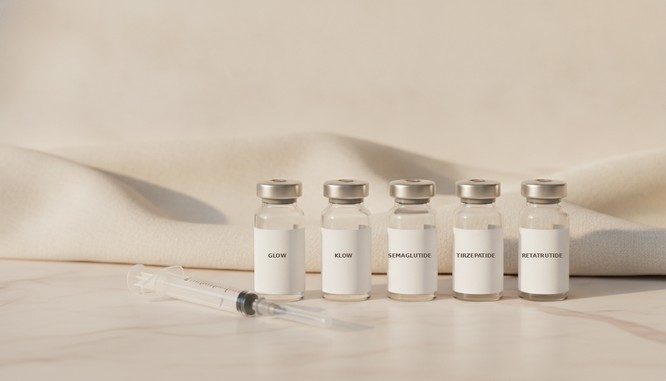
“It is about impossible to go a month without seeing at least one patient who is self-injecting peptides obtained without a prescription from who knows where, for an injury, for joint pain, or for what they are calling recovery. BPC-157 comes up all the time, and growth hormone secretagogues are about the most frequent second thing asked about, usually phrased as anti-aging.”
“Very few of them know how little human research is available on these compounds, know that most dosage regimens have been picked up from bodybuilding forums, or know that the vial is coming from an overseas research-chemical company, with no guarantee as to contents, purity or whether it is a sterile preparation.”
“I have seen and operated on patients with abscesses as well as infected lesions at injection sites that stem from these supplies.”
The Question He Now Asks Before Surgery
“Before operating, I routinely ask my patients if they have been injecting peptides, much like asking about their supplements, mainly because I have no idea what is in the vial my patient received and neither do they.”
“I am now asking my patients about peptide use before surgery exactly how I would ask them about supplements. When it comes from an online research chemical supplier, neither the patient nor I knows what is inside the bottle.”
On Compounding Pharmacies
“If some peptides could now go through licensed compounding pharmacies with an actual prescription, that would be safer than the massive, unregulated market people are already buying from on the internet.”
“The big risk is that people read the news and think a scientist gave their blessing simply because it became more available.”
“Expanding legal options answers the question, who is allowed to make these? It does not address the question of how effective these peptides actually are. One of those questions deals with legal access and the other asks about scientifically verified results, yet they will both get treated the same.”
Where That Leaves You
“Peptides are not peptides, and one answer is not the answer. Topical peptides applied to the skin are mostly not toxic and, in most circumstances, they have been exaggerated. Peptides that are compounded or injected are promising enough to merit genuine study, and they are already used a great deal, far ahead of the studies and with almost no supervision.”
At The Medspa at Southwest Plastic Surgery, anything injectable comes from a known source at a documented dose, under medical supervision. That covers our injectables and our medically supervised weight loss program.
About Dr. Agullo
Dr. Frank Agullo is a double board-certified plastic surgeon, Mayo Clinic fellowship trained, Clinical Associate Professor of Plastic Surgery at Texas Tech University Health Sciences Center Paul L. Foster School of Medicine, and a Castle Connolly Top Doctor for thirteen consecutive years. He sits on the editorial boards of Aesthetic Plastic Surgery and Plastic and Reconstructive Surgery Global Open, and was a named expert source in U.S. News & World Report’s August 2026 explainer on peptides.
Schedule a Consultation
If you are injecting something and you are not certain what is in it, bring the bottle to your appointment. Call (915) 590-7900, text 1-866-814-0038, or contact us to book. #StayBeautiful
@RealDrWorldWide on Instagram, TikTok, and Snapchat, @Agullo on X, or @AgulloPlasticSurgery on Facebook.
Dr. Agullo wrote two companion pieces: the editorial on why the word peptide confuses everyone at drworldwide.com, and the surgical safety piece on agulloplasticsurgery.com.
